
CASE-033 · Complex Cases
Adult Spacing and Worn Anterior Restorations — Orthodontic-Restorative Interface
An adult with generalised anterior spacing, mismatched existing upper anterior restorations, an uneven incisal plane and posterior wear, where the orthodontic goal was to position the teeth for a restorative finish rather than to close every space.
- Findings
- 05
- Options
- 03
- Stages
- 05
Clinical records · drag to compare
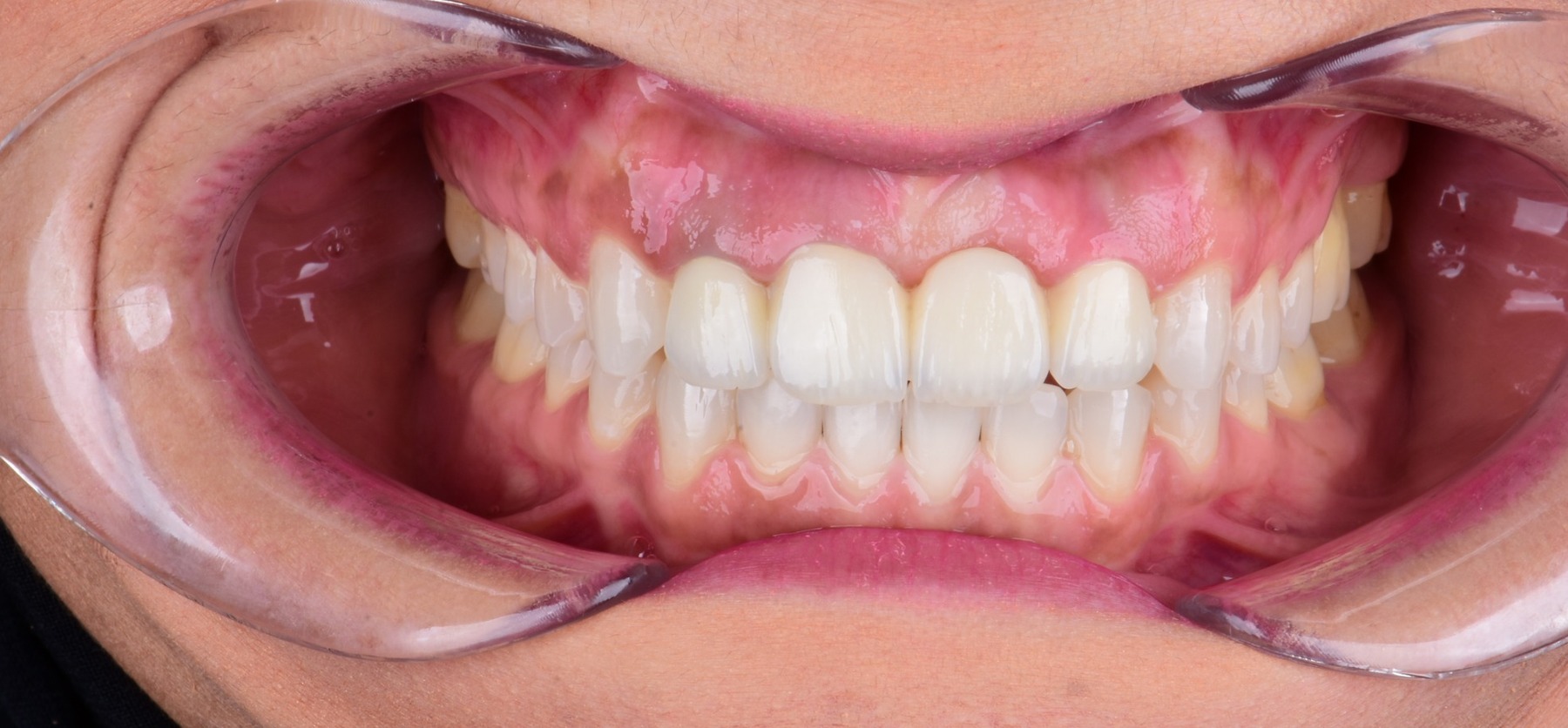
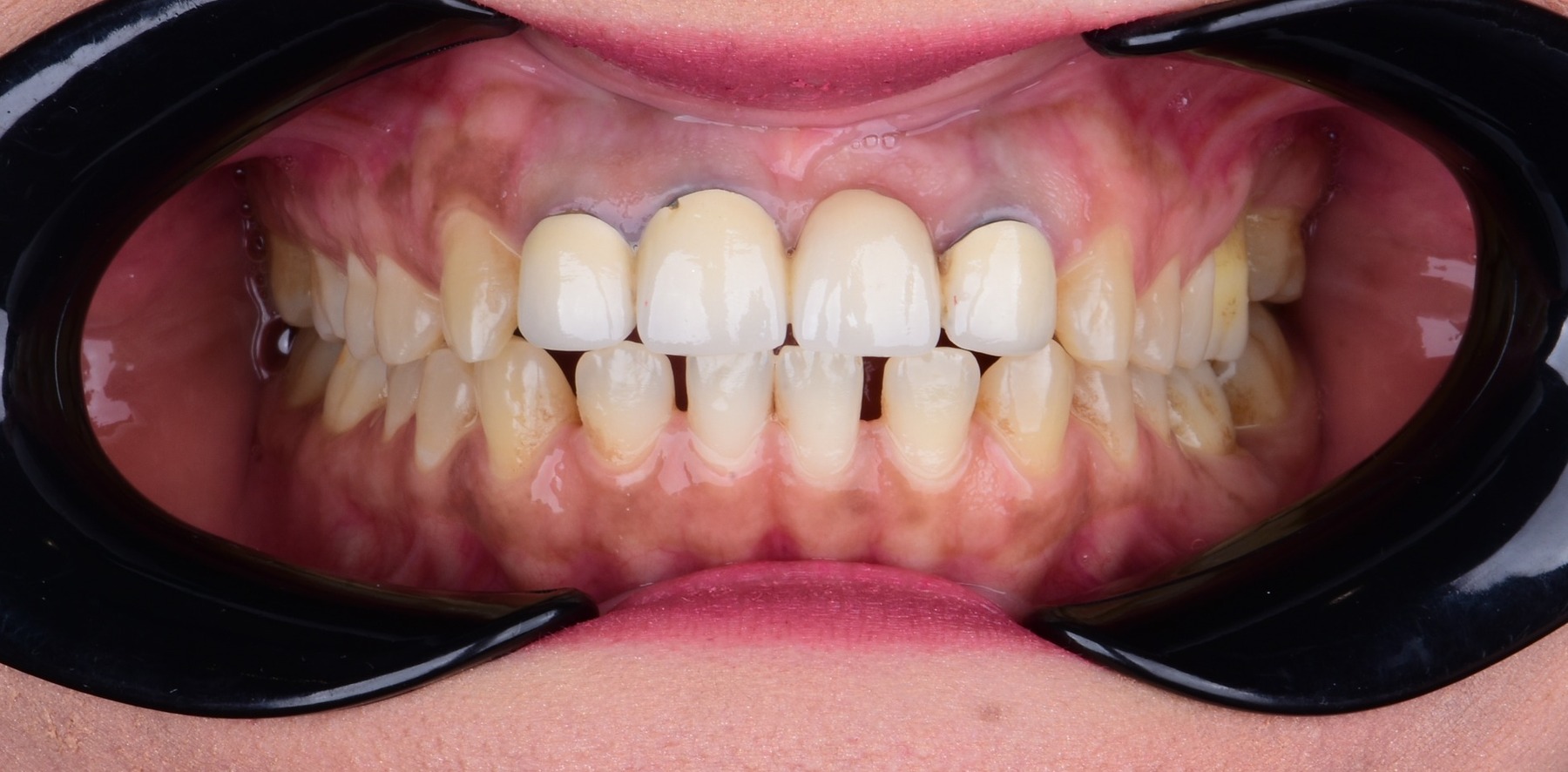
Clinical challenge
Deciding which spaces orthodontics should close and which should be redistributed for the restorative phase, without over-retracting an anterior segment already carrying restorations.
Outcome
Space allocated to plan, a level incisal plane, coordinated restorations of correct proportion, and restored anterior guidance.
Diagnostic findings
- Generalised anterior spacing in both arches with open contact points
- Existing upper anterior restorations of differing width, shade and emergence
- Uneven incisal plane with a shortened lateral incisor display
- Posterior occlusal wear with flattened cuspal anatomy
- Recession and blunted interdental papillae in the lower anterior region
Problem list
- Spacing distributed unevenly relative to ideal tooth proportion
- Restorations dictating apparent tooth width rather than the reverse
- Loss of anterior guidance from worn and shortened edges
Treatment objectives
- Redistribute space to match planned restorative widths
- Level the incisal plane and re-establish anterior guidance
- Align roots so that emergence and papilla support are achievable
- Close only the spaces that should not be restored
Options weighed
Full orthodontic space closure
Simplest finish; would compress teeth into widths the restorations cannot support.
Restorative-only widening
Fast, but bulks the existing restorations and leaves root positions unfavourable.
Orthodontic space redistribution then restorative finishing
Longest route; the only one where both tooth position and proportion end up correct.
The decision
Orthodontic space redistribution guided by a restorative plan agreed before bonding — the spaces were treated as a resource to be allocated, not a defect to be erased.
Clinical reasoning
The complaint was spacing, but the constraint was proportion. Closing everything would have produced narrow, crowded restorations and unstable contacts. Working backwards from the planned restorative widths turned an ambiguous space-closure case into a set of defined target positions.
Strategy
Fixed appliances with segmental space control: consolidate the posterior segments, hold planned anterior spaces open with passive coils, level the incisal plane, and align roots to the restorative wax-up before debonding.
Biomechanics
Continuous archwire with soldered stops maintaining allocated spaces, light vertical elastics for incisal plane control, and torque adjustments to bring anterior roots into a favourable emergence position.
Treatment sequence
- 01Restorative plan and digital wax-up agreed first
- 02Levelling and posterior consolidation
- 03Anterior space redistribution against archwire stops
- 04Root positioning and incisal plane detailing
- 05Debond, retention, then restorative finishing
Digital workflow
The wax-up was superimposed on the intraoral scan to define exact space targets per tooth, so every millimetre of space had a stated destination before the appliance moved anything.
Monitoring, adaptations & reassessment
Space widths were measured against the plan at each visit rather than judged by eye.
One upper lateral space closed 0.8 mm more than allocated; the coil was reactivated and the adjacent contact reopened rather than asking the restorative phase to absorb the error.
Anterior guidance was reassessed after the restorative finish to confirm the worn edges were no longer the contact of last resort.
14 · Clinical takeaway
In a restorative interface case, orthodontics is not there to close space — it is there to put the space where the restoration needs it.
Related cases
Related clinical notes قبل العلاج
 بعد العلاج
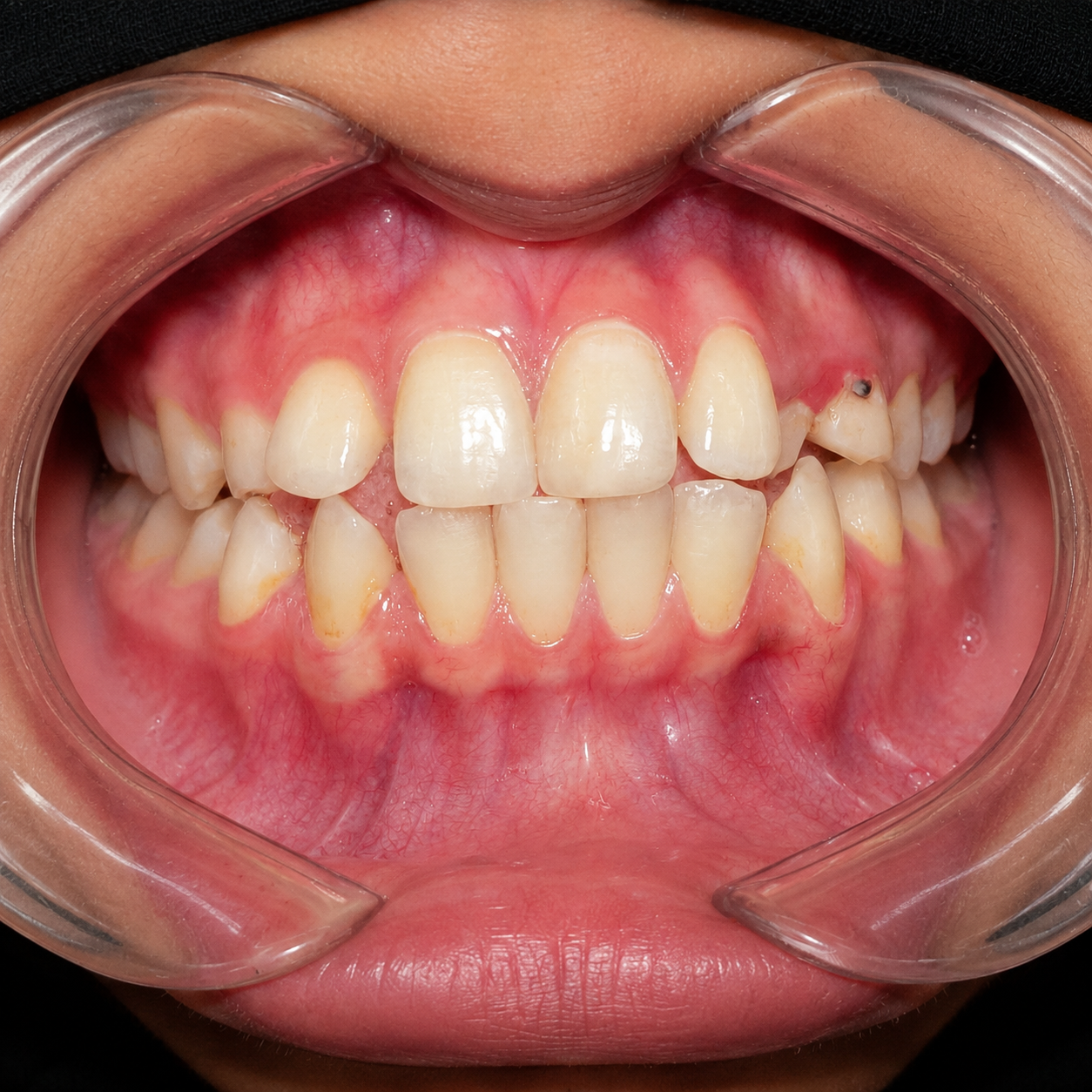
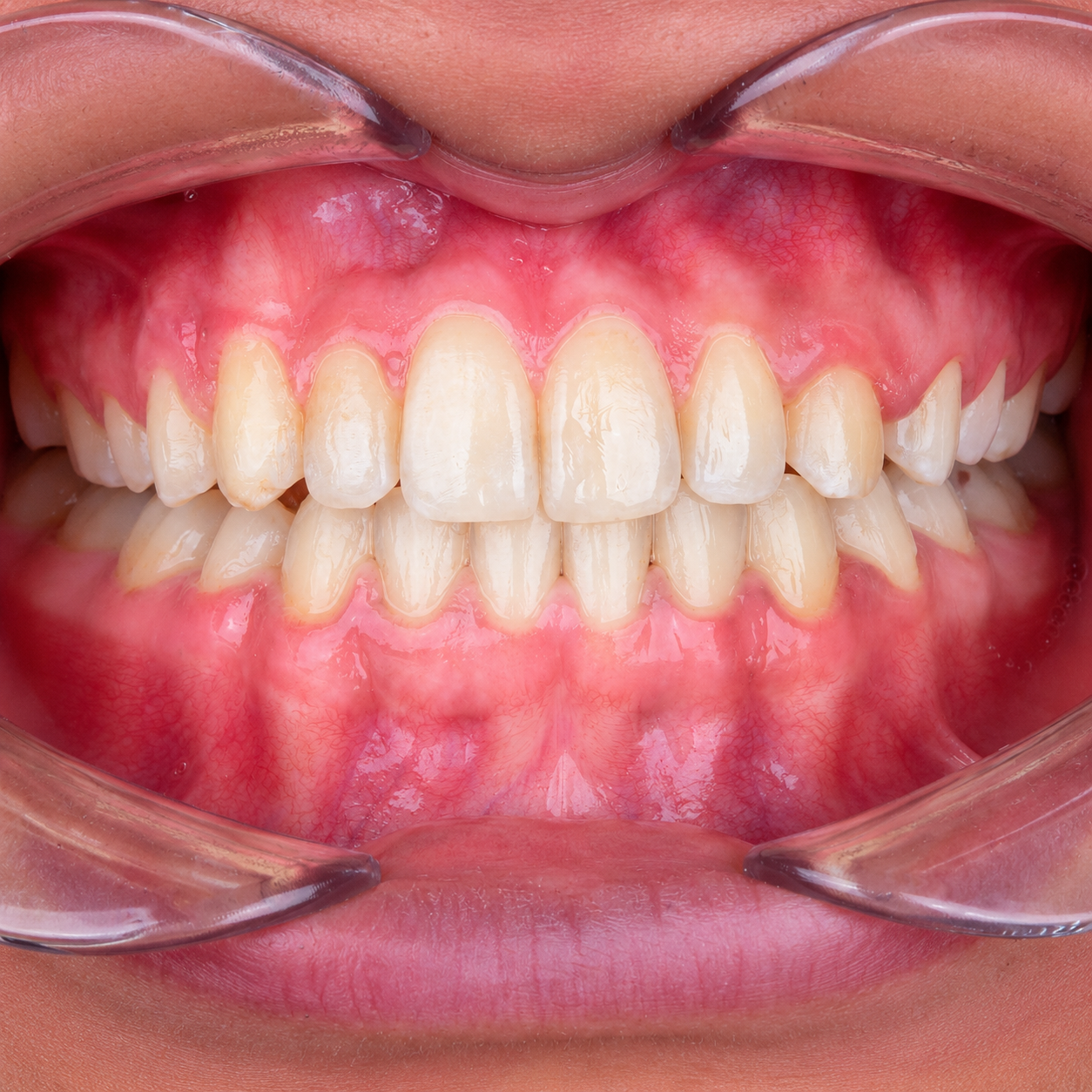
CASE-032 · Fixed Orthodontics
Adult Anterior Crowding with Rotations and Attrition Risk
- المقاربة
- Fixed Orthodontics
- الموجودات
- 05 مسجّلة
- المراحل
- 05 مخطّطة
 قبل العلاج
 بعد العلاج
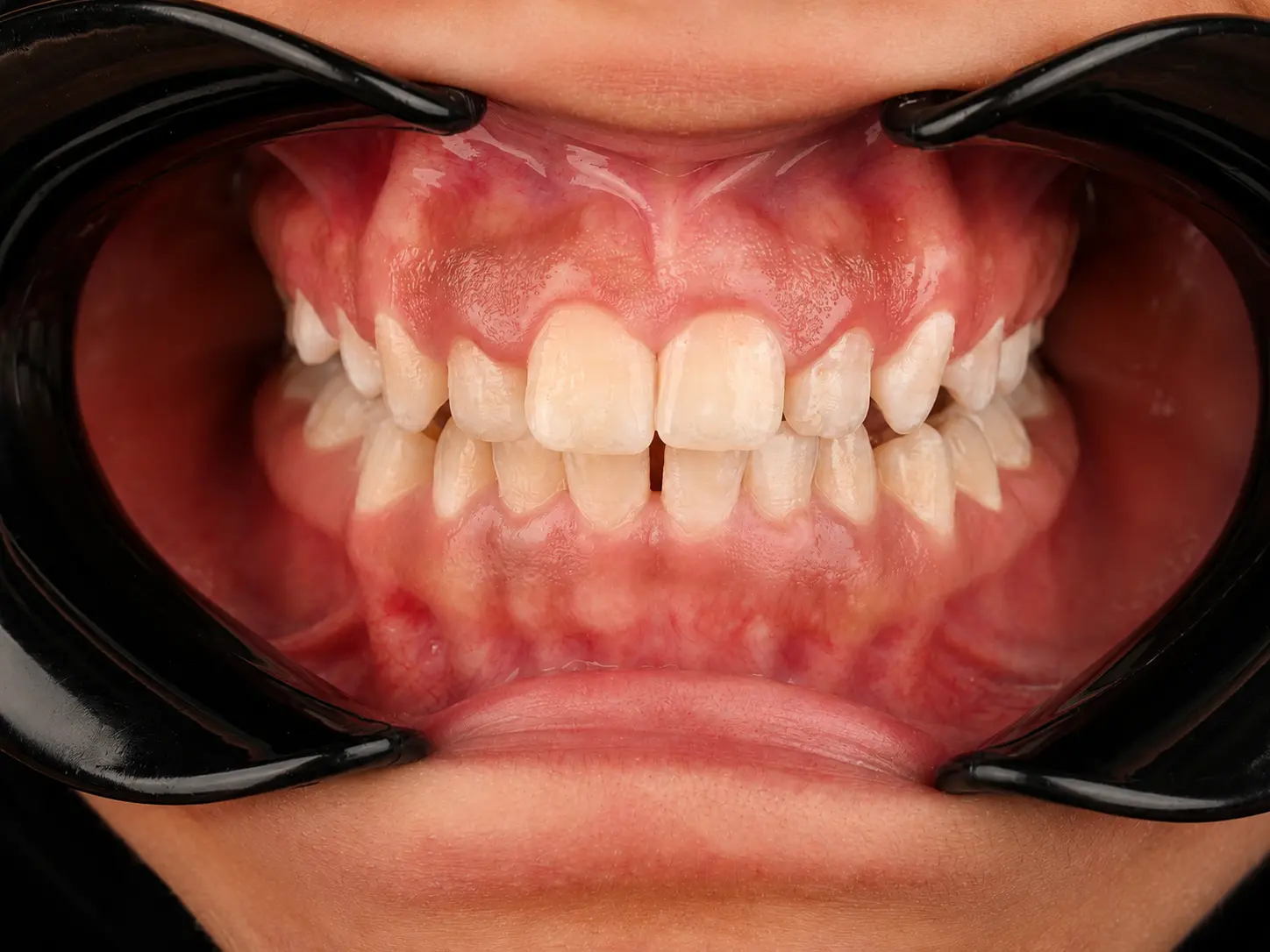
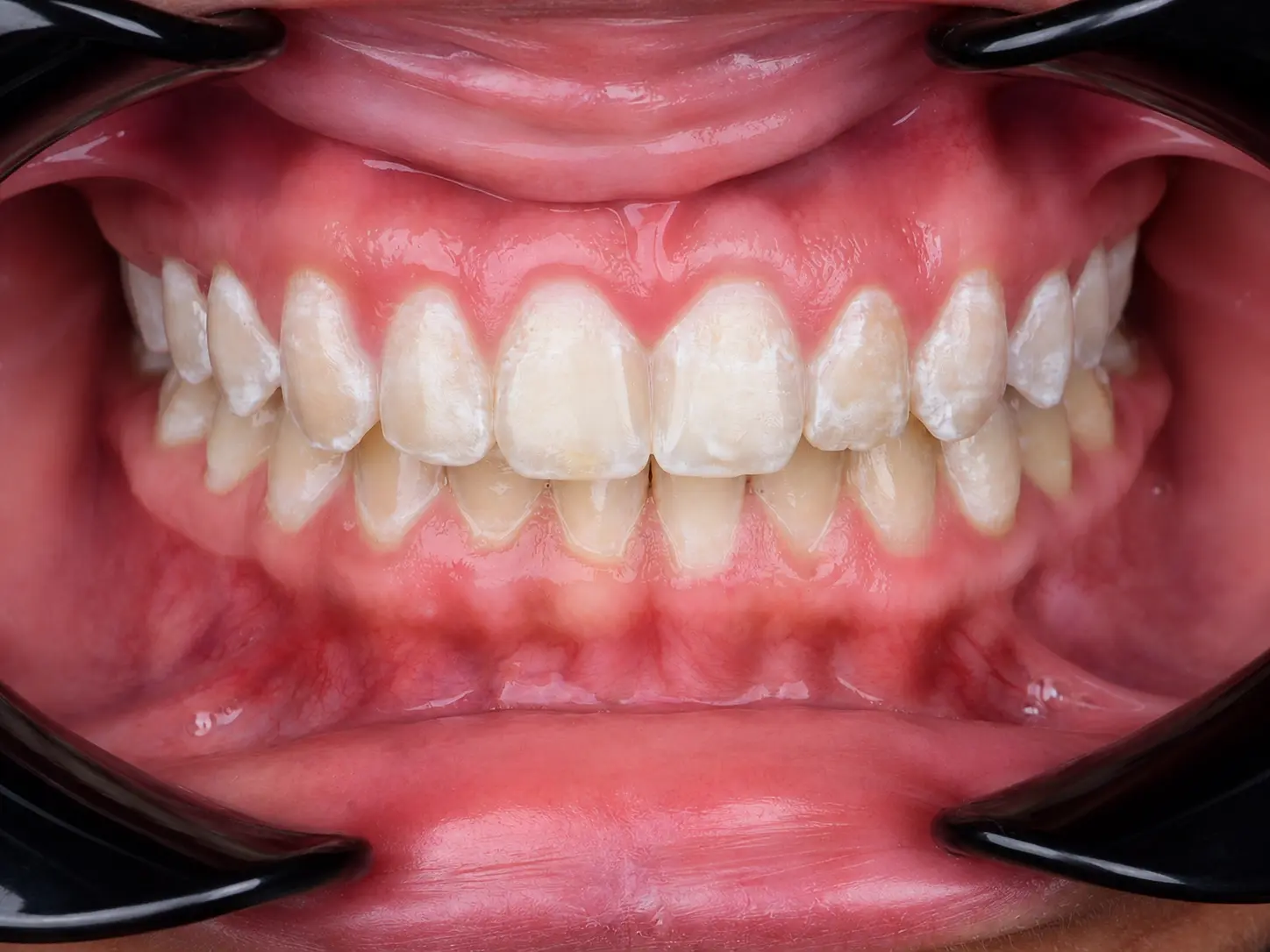
CASE-034 · Fixed Orthodontics
Severe Crowding with a Blocked-Out Upper Canine and Anterior Edge Wear
- المقاربة
- Fixed Orthodontics
- الموجودات
- 05 مسجّلة
- المراحل
- 06 مخطّطة
 قبل العلاج
 بعد العلاج
CASE-035 · Fixed Orthodontics
Crowding with Rotated Posteriors and an Unstable Anterior Contact
- المقاربة
- Fixed Orthodontics
- الموجودات
- 05 مسجّلة
- المراحل
- 06 مخطّطة
Next step
Discuss a case
Bring a comparable case and work through its decision points together.