
CASE-035 · Fixed Orthodontics
Crowding with Rotated Posteriors and an Unstable Anterior Contact
Moderate crowding with rotated and imbricated posterior segments, an irregular lower incisal plane and an anterior relationship that met edge to edge without a stable contact — treated by rebuilding the contact pattern rather than only straightening crowns.
- Findings
- 05
- Options
- 03
- Stages
- 06
Clinical records · drag to compare
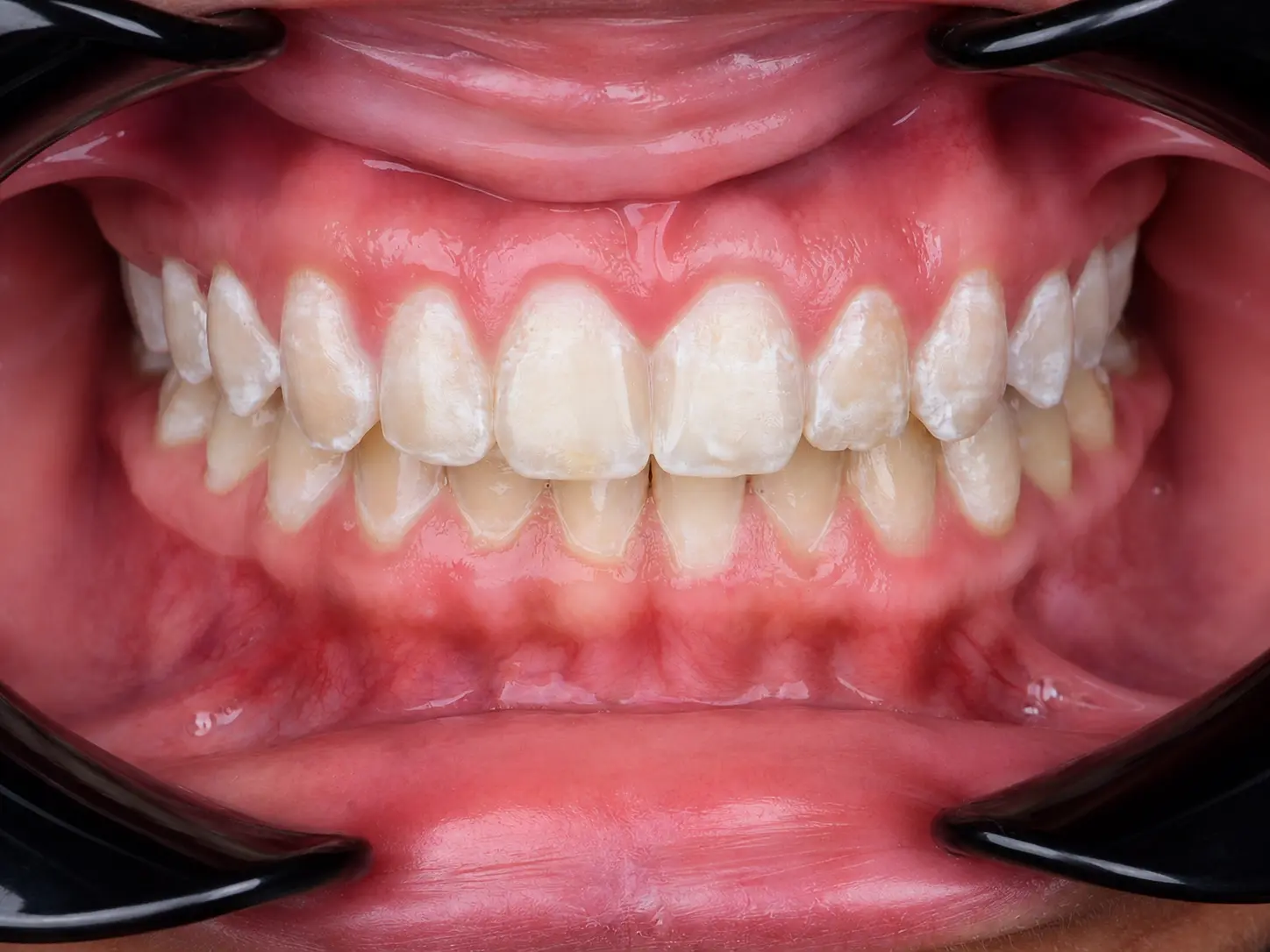
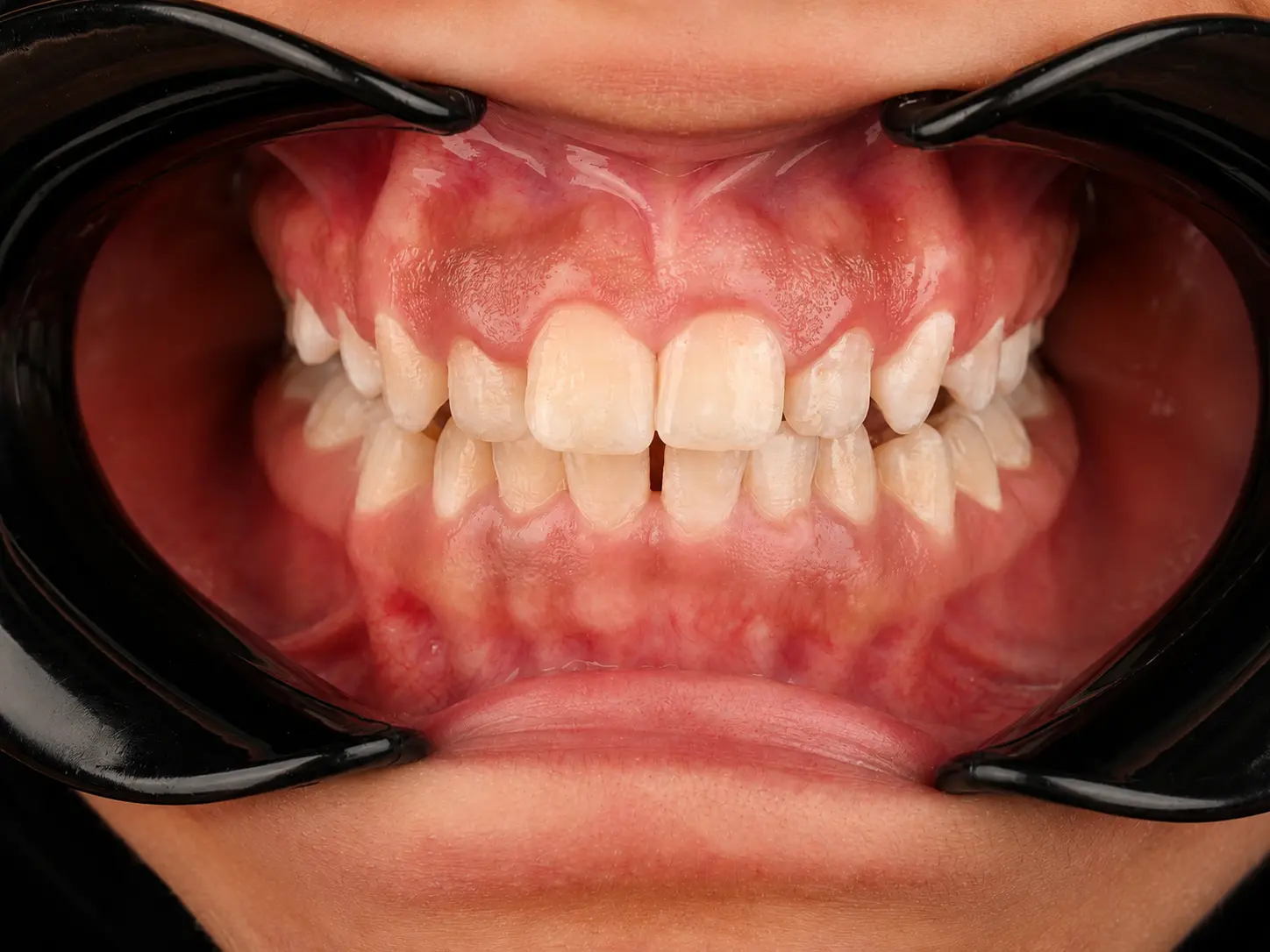
Additional records
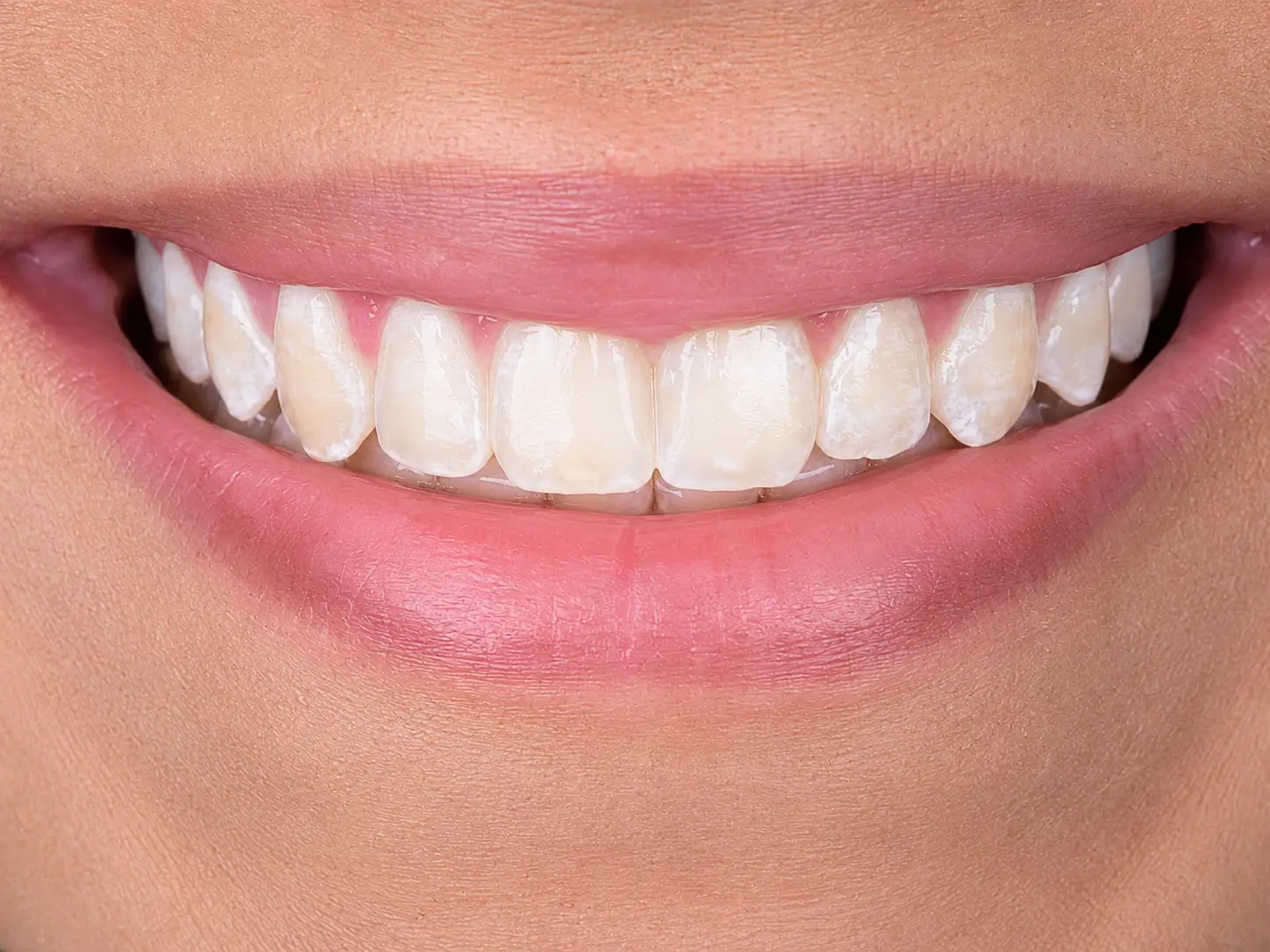
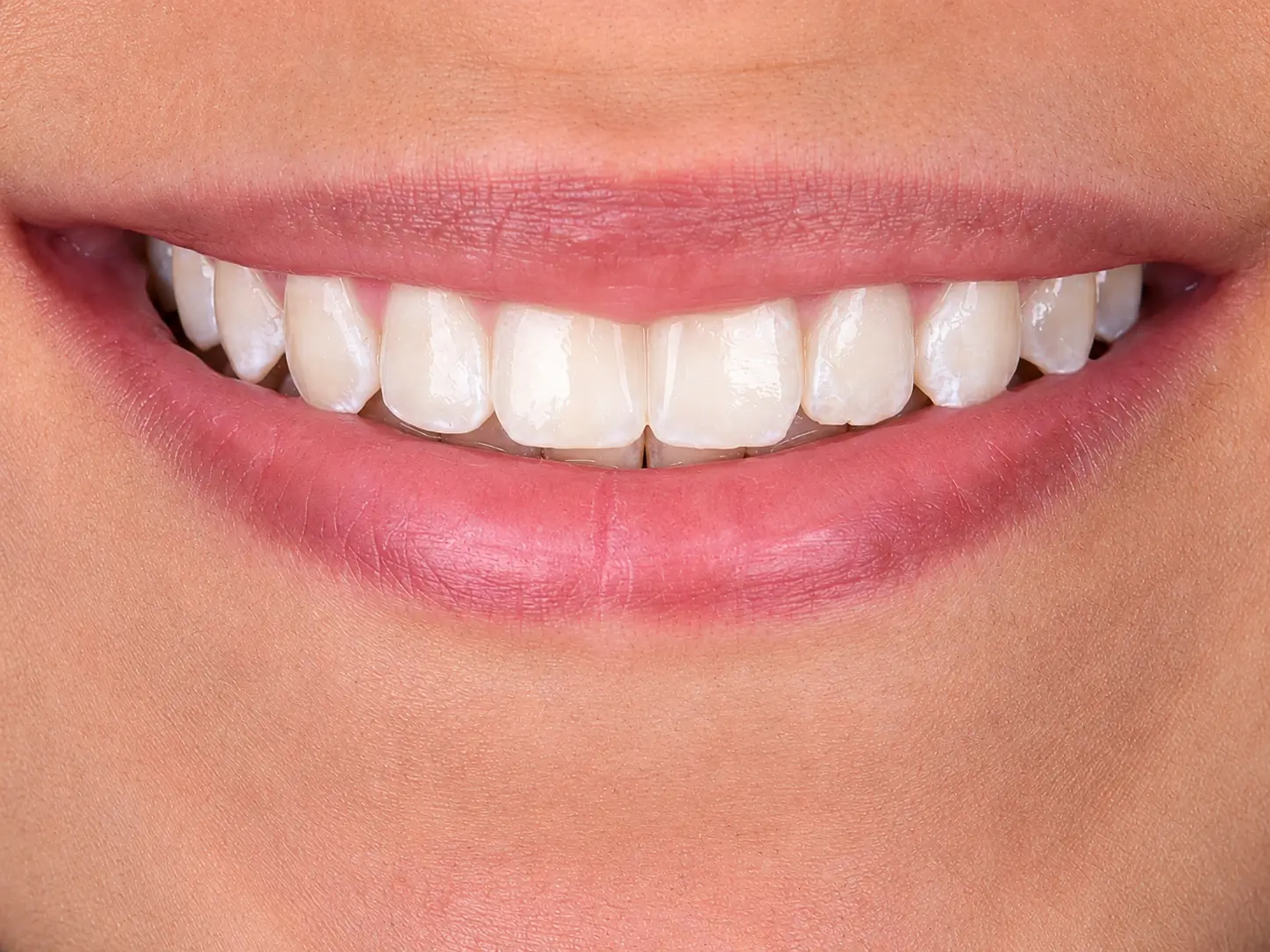
Clinical challenge
An anterior segment that touched without holding: incisal contact existed but was not distributed, so the front teeth were loaded in a pattern the arch could not support long term.
Outcome
Aligned and derotated arches, level incisal planes, anterior contact shared across the segment, and restored hygiene access.
Diagnostic findings
- Moderate upper and lower anterior crowding with rotated incisors
- Rotated and imbricated posterior segments reducing effective arch length
- Edge-to-edge anterior relationship without a distributed stable contact
- Irregular lower incisal plane with early edge wear
- Localised gingival inflammation at the crowded contact points
Problem list
- Anterior load concentrated on a small number of contacts
- Posterior rotations masking available arch length
- Crowded contacts limiting hygiene access
Treatment objectives
- Recover arch length by derotation before considering enamel reduction
- Level the incisal planes and distribute anterior contact
- Coordinate the arches transversely
- Retain the corrected contact pattern, not only the alignment
Options weighed
Aligners with staged IPR
Acceptable aesthetics, but posterior derotation and torque control were the demanding parts of this case.
Fixed appliances with derotation-first sequencing
Best control of posterior rotations and anterior torque; chosen.
Alignment only, accept the anterior contact
Rejected — leaves the loading pattern that produced the wear.
The decision
Fixed appliances, derotation first, with anterior torque and levelling planned before any contact refinement.
Clinical reasoning
The crowding was the visible finding; the unstable anterior contact was the one that would decide longevity. Derotating the posterior segments returned arch length without proclination, which then allowed the incisors to be levelled and torqued into a position where contact could be shared across the segment instead of carried by two teeth.
Strategy
Sequenced fixed mechanics: posterior derotation and arch coordination, then levelling, then anterior torque expression, finishing with contact refinement and settling.
Biomechanics
Light continuous forces with progressive archwire sequencing; torque expression was deferred to the working wire so the incisors were not proclined during early alignment.
Treatment sequence
- 01Hygiene phase and baseline records
- 02Posterior derotation and arch coordination
- 03Levelling of both incisal planes
- 04Anterior torque expression
- 05Contact refinement and settling
- 06Fixed lingual retention with a removable overlay at night
Digital workflow
Arch-length auditing quantified the space returned by derotation, so interproximal reduction was scheduled only where the ledger still ran short.
Monitoring, adaptations & reassessment
Six-week reviews with contact checks on the anterior segment, tracking whether load was spreading as the incisal plane levelled.
Planned IPR at two lower contacts was cancelled after derotation returned enough space to align without enamel reduction.
Anterior guidance was reassessed after settling to confirm contact was distributed rather than concentrated.
14 · Clinical takeaway
Straight teeth are not the same as stable teeth. Fix the contact pattern and the alignment holds.
Related cases
Related clinical notes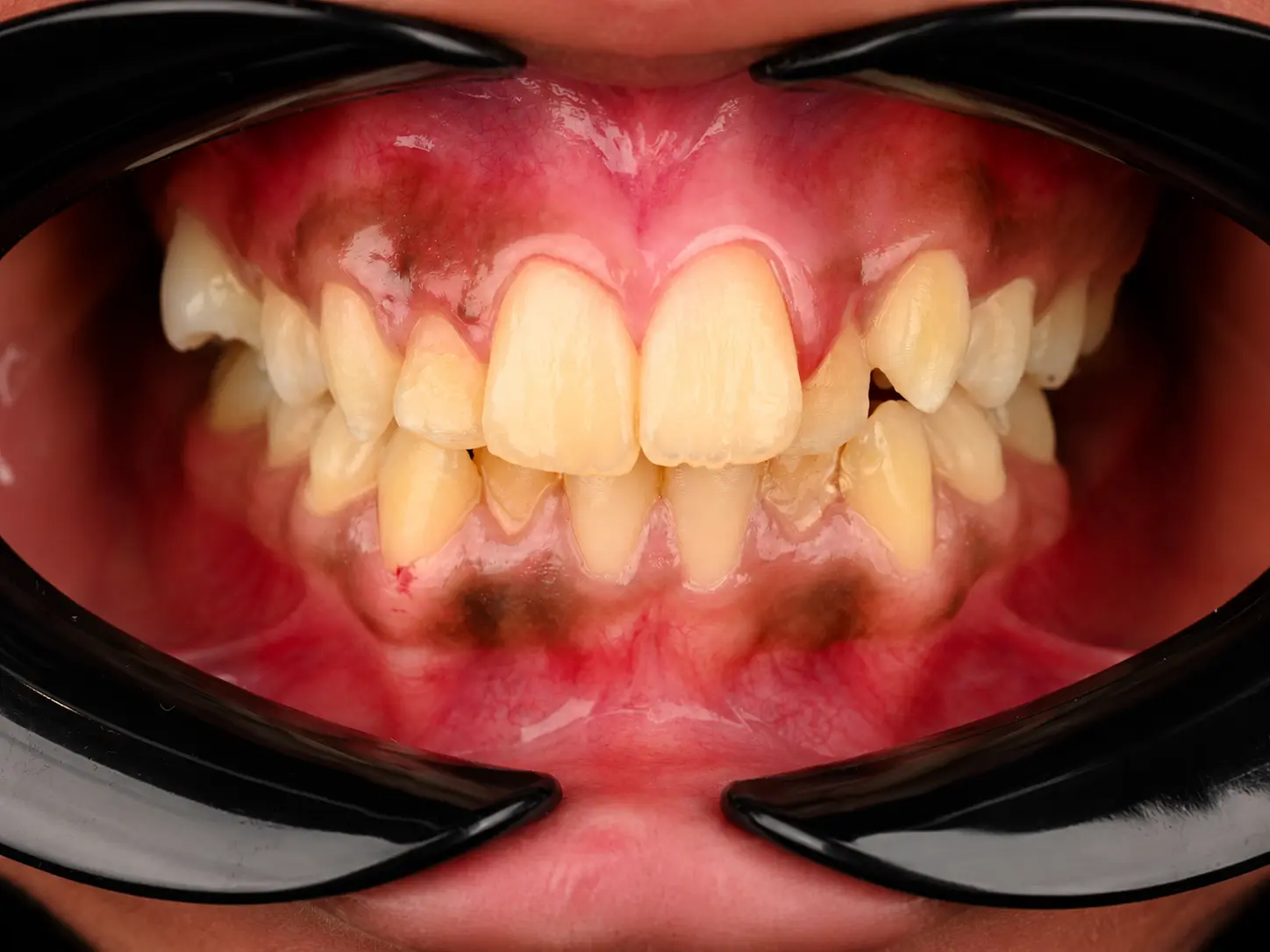 قبل العلاج
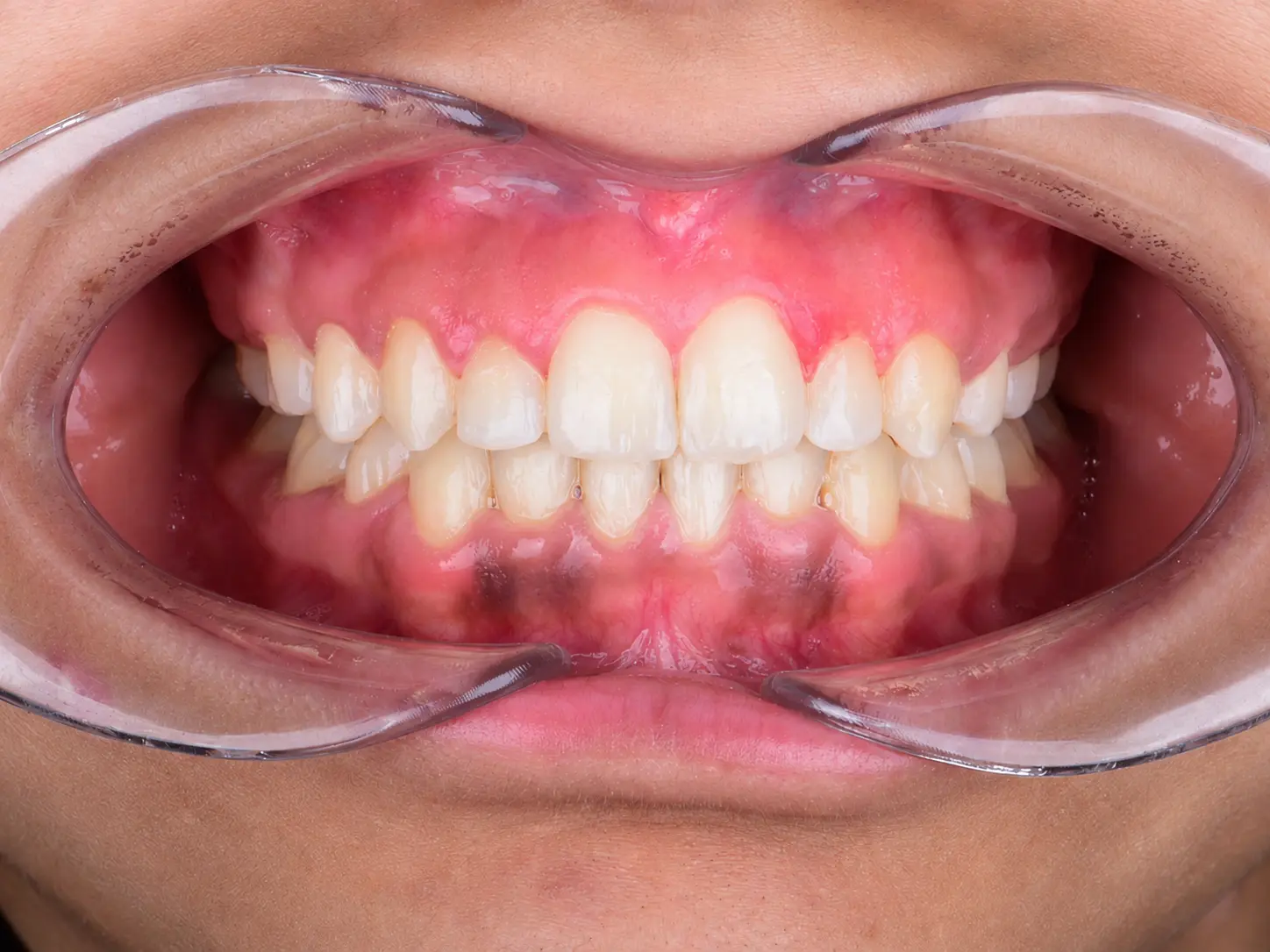 بعد العلاج
CASE-032 · Fixed Orthodontics
Adult Anterior Crowding with Rotations and Attrition Risk
- المقاربة
- Fixed Orthodontics
- الموجودات
- 05 مسجّلة
- المراحل
- 05 مخطّطة
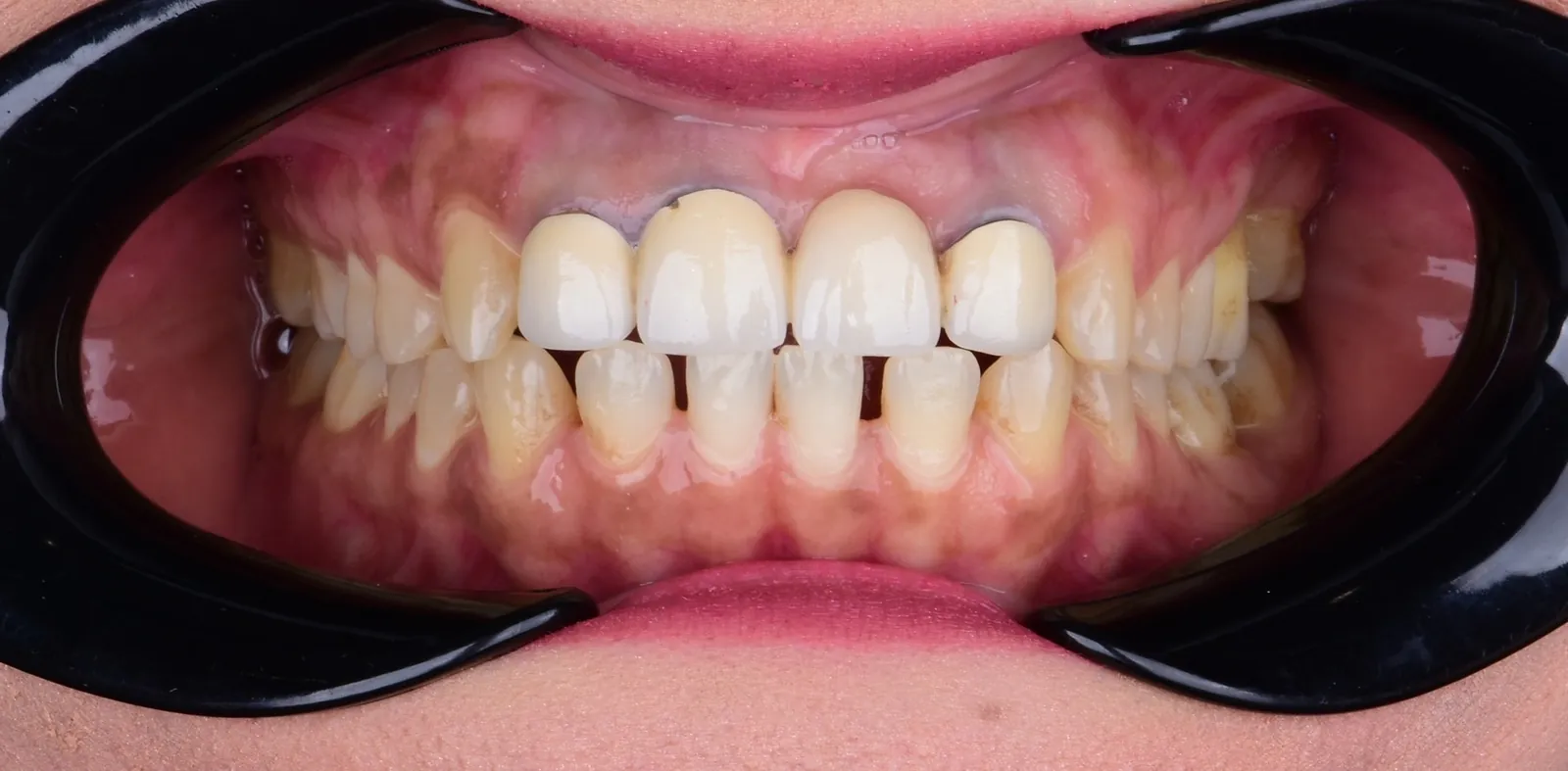 قبل العلاج
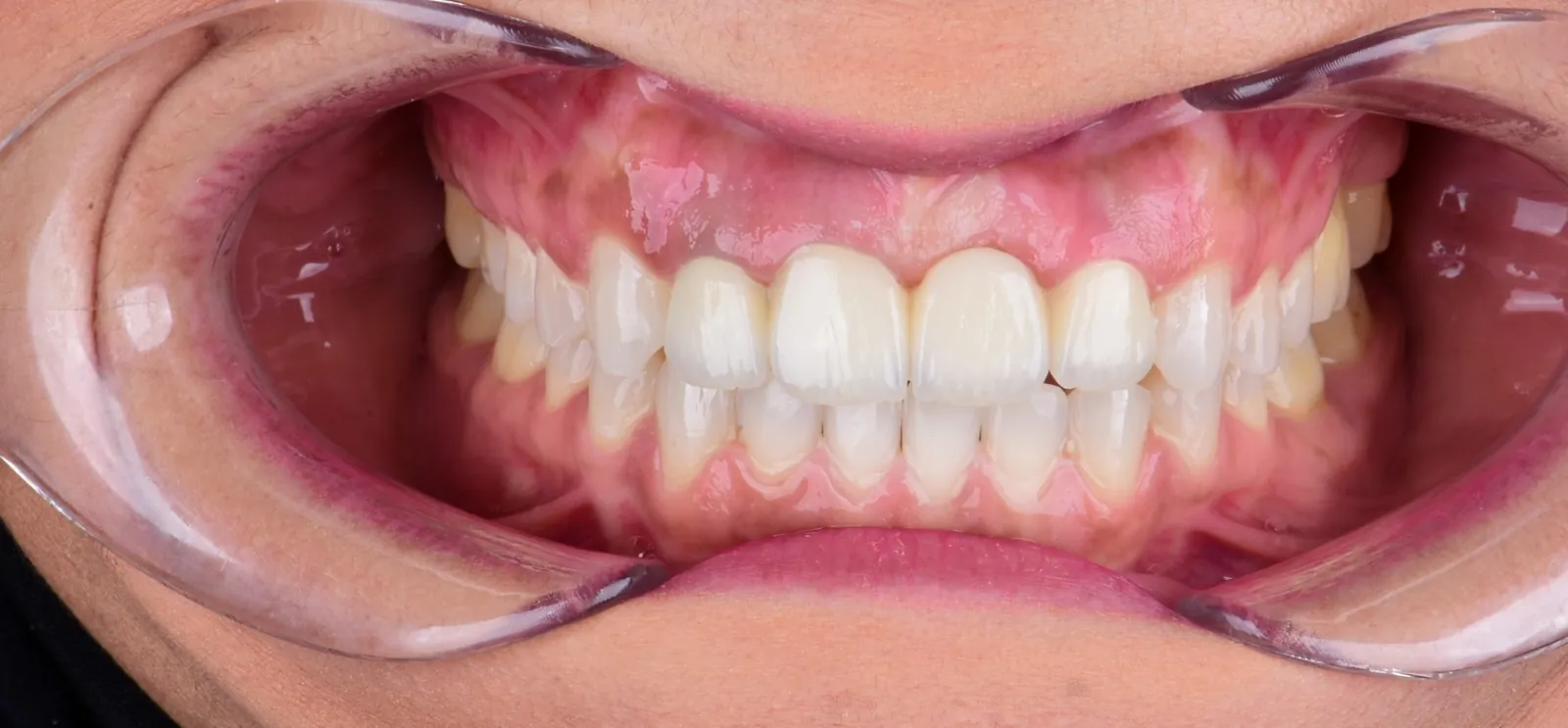 بعد العلاج
CASE-033 · Complex Cases
Adult Spacing and Worn Anterior Restorations — Orthodontic-Restorative Interface
- المقاربة
- Complex Cases
- الموجودات
- 05 مسجّلة
- المراحل
- 05 مخطّطة
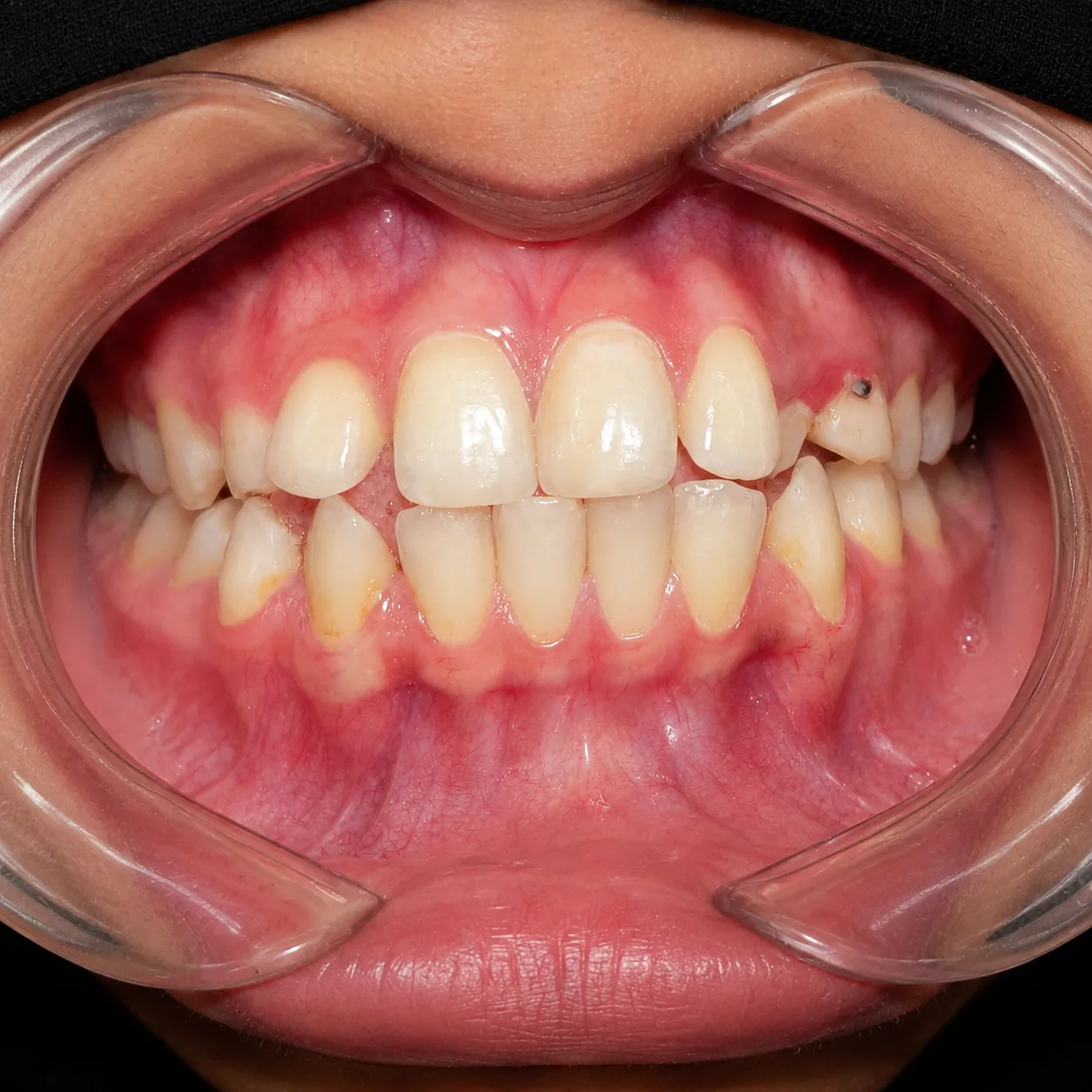 قبل العلاج
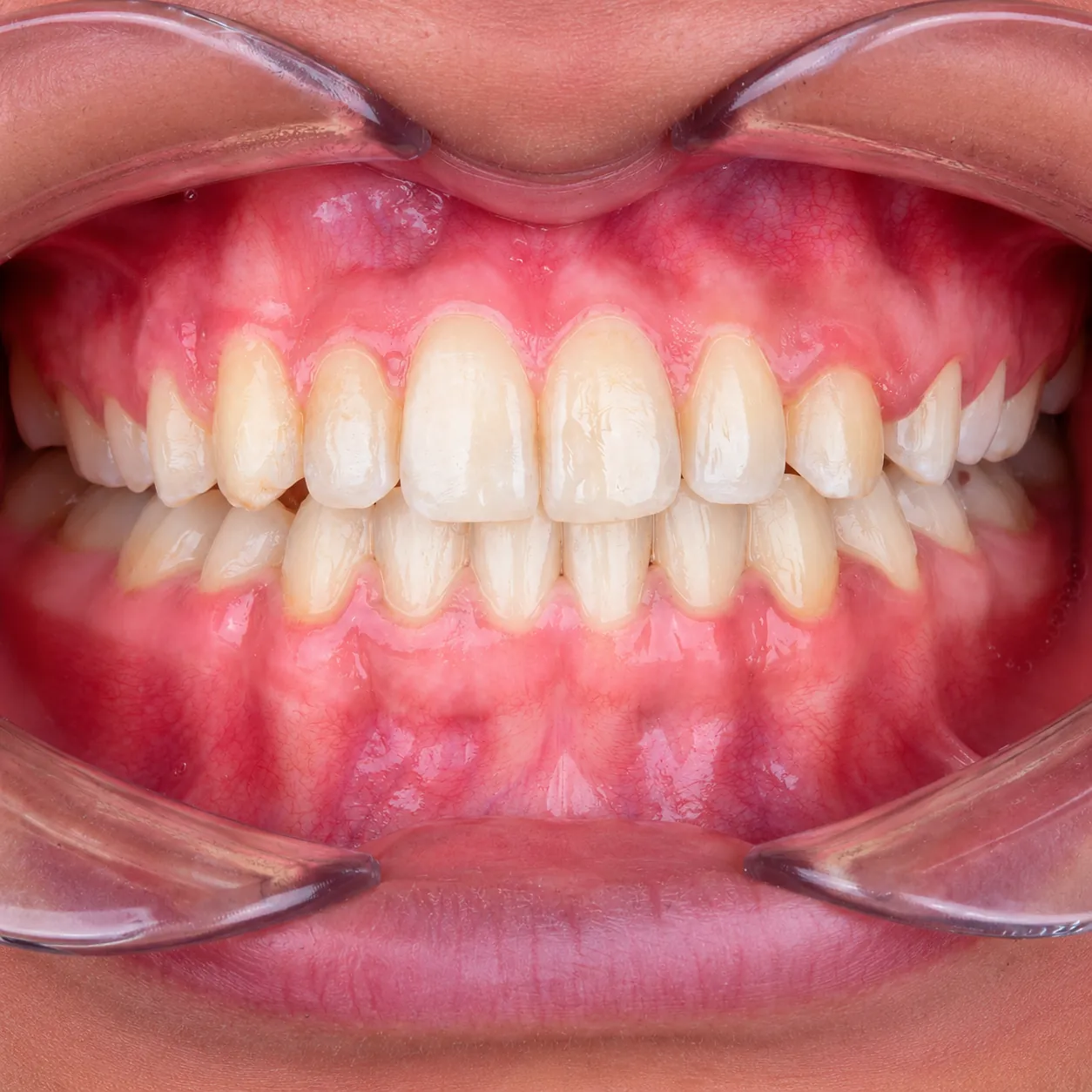 بعد العلاج
CASE-034 · Fixed Orthodontics
Severe Crowding with a Blocked-Out Upper Canine and Anterior Edge Wear
- المقاربة
- Fixed Orthodontics
- الموجودات
- 05 مسجّلة
- المراحل
- 06 مخطّطة
Next step
Discuss a case
Bring a comparable case and work through its decision points together.