
CASE-032 · Fixed Orthodontics
Adult Anterior Crowding with Rotations and Attrition Risk
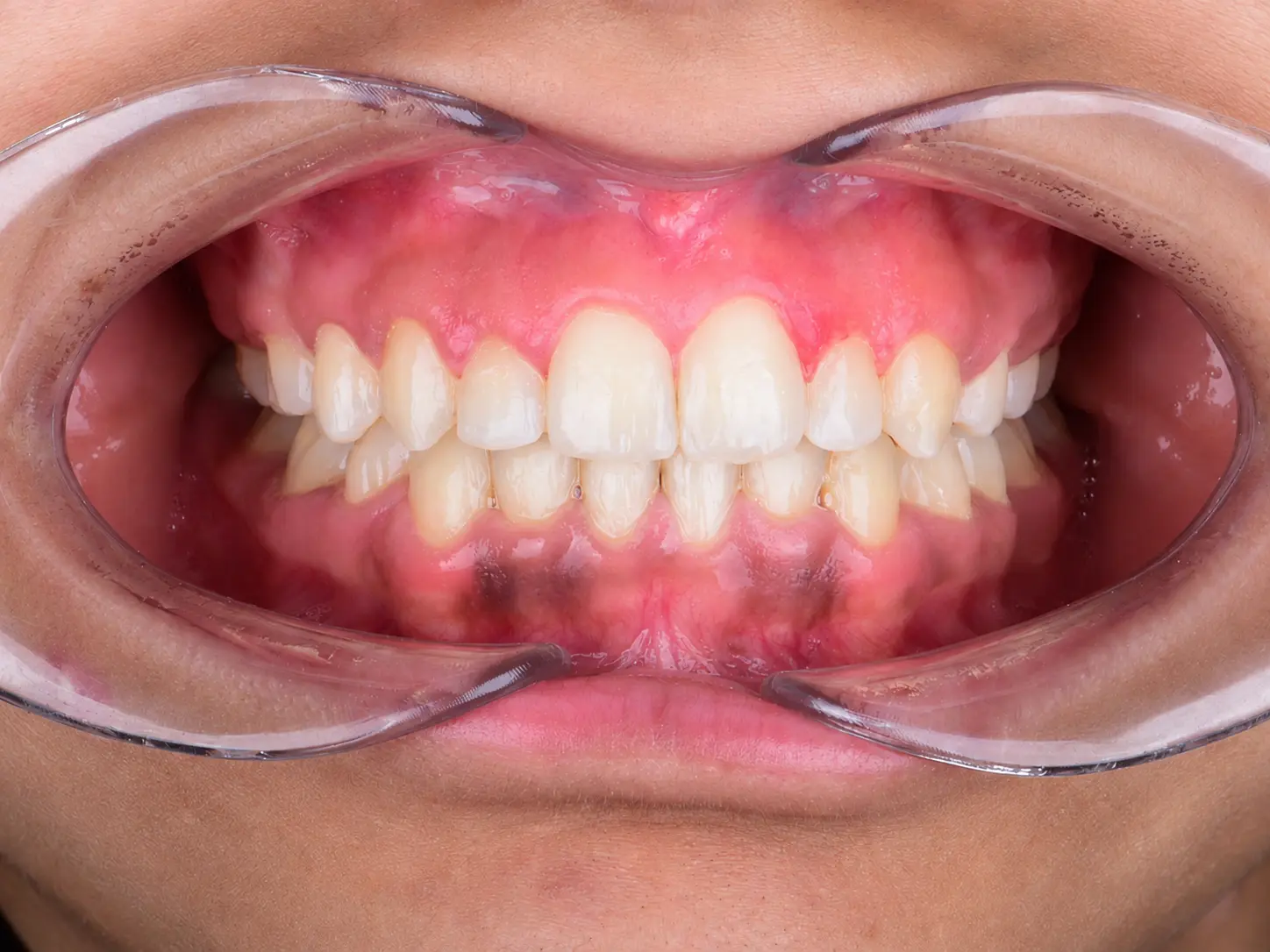
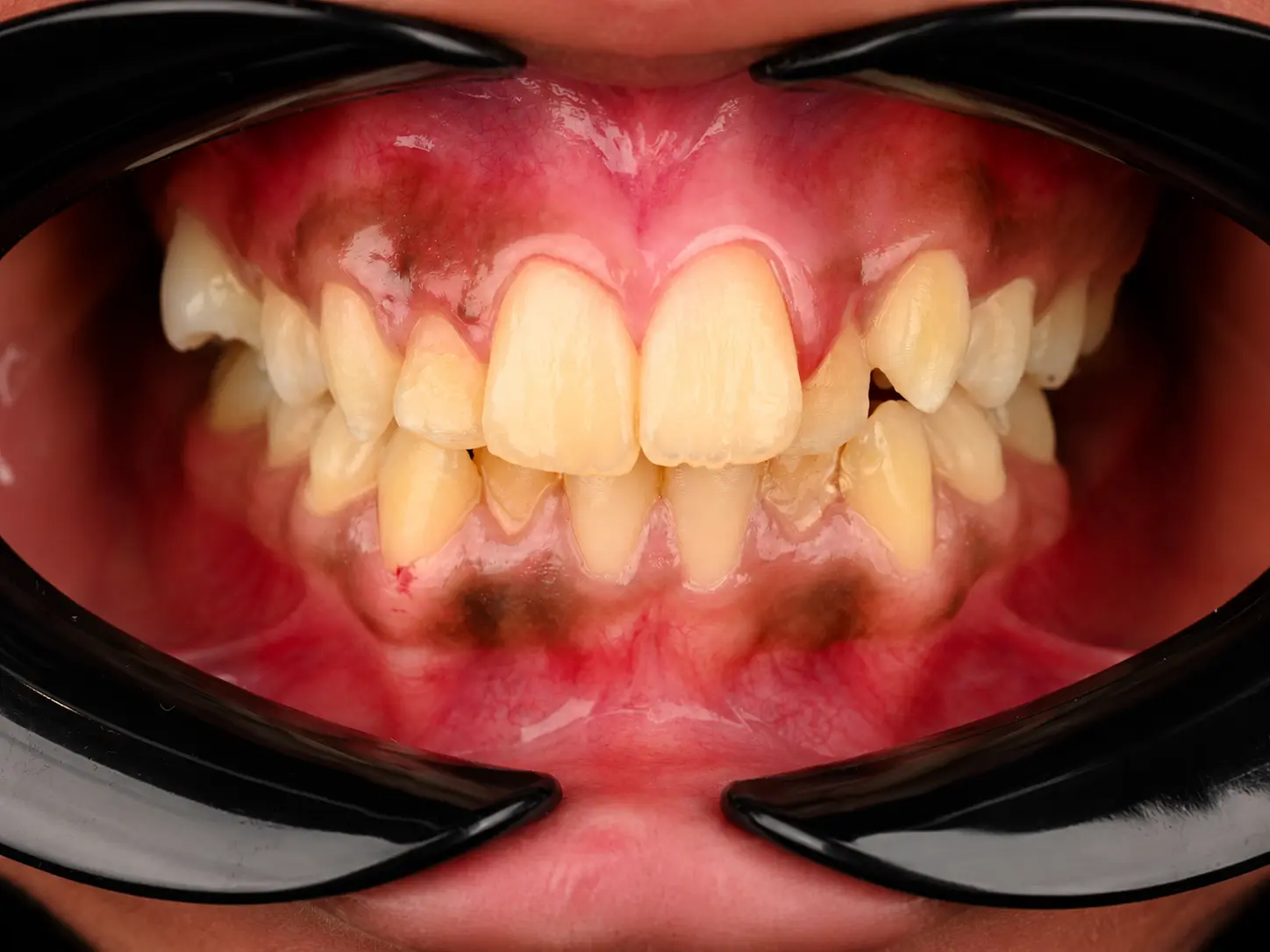
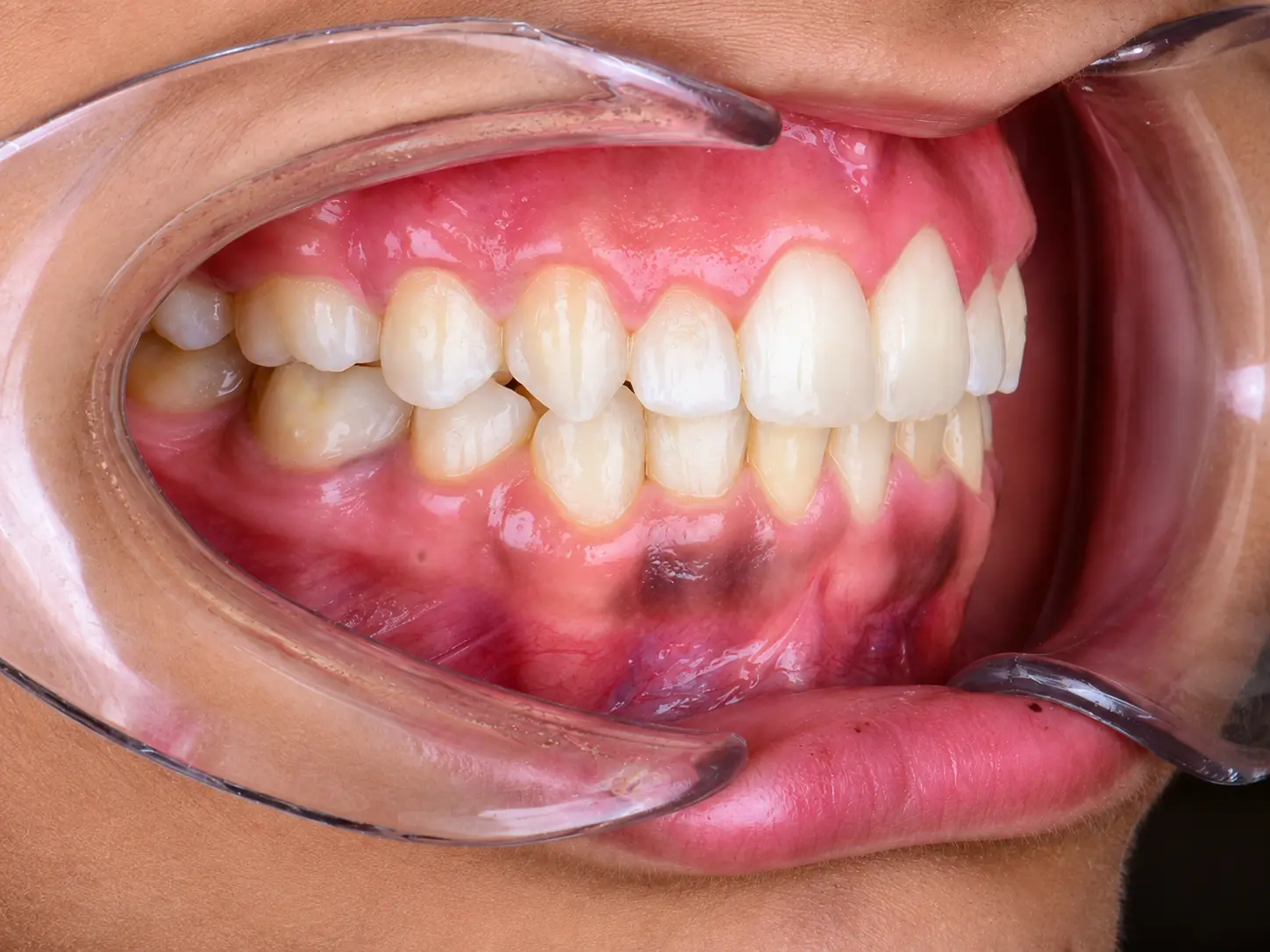
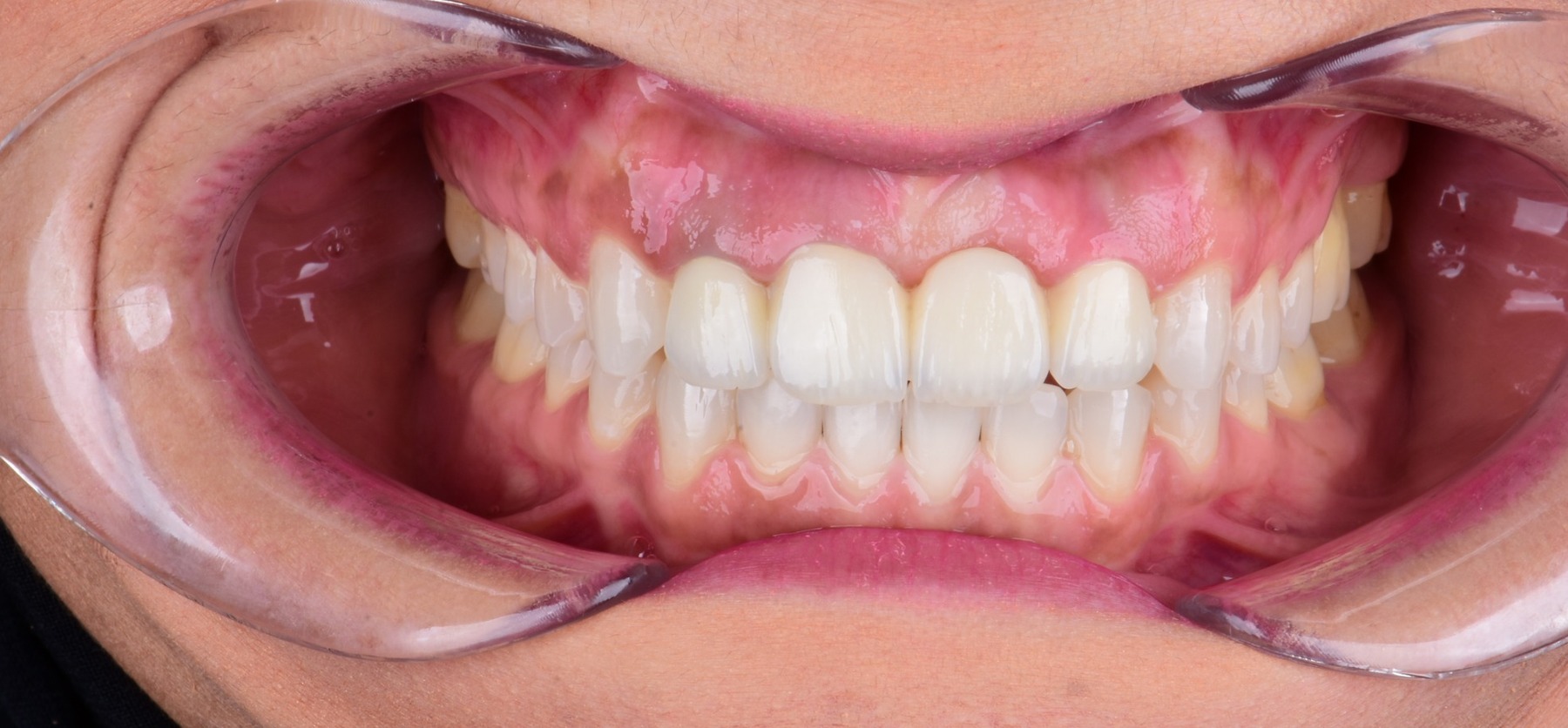
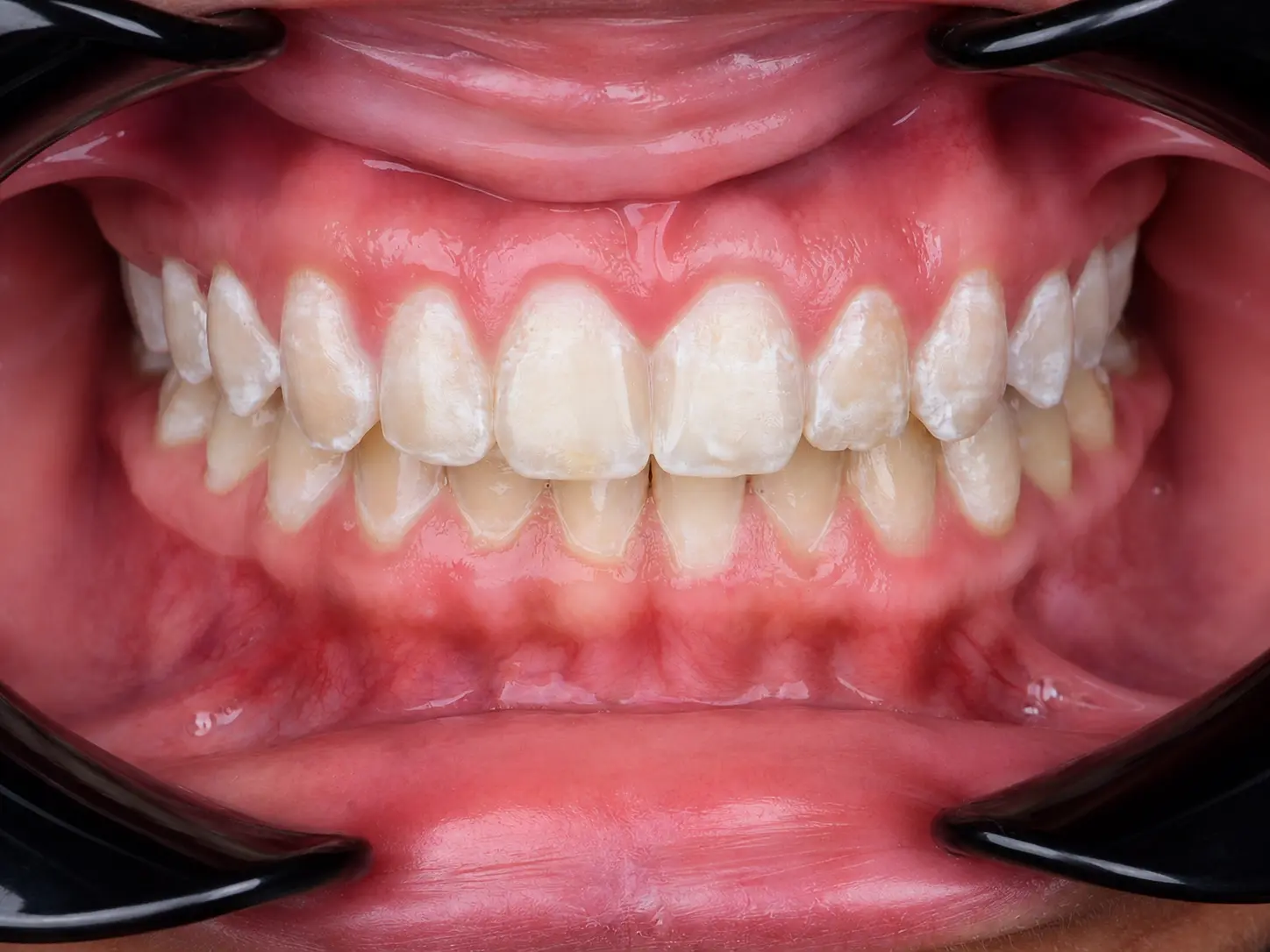
An adult presenting with moderate upper and lower anterior crowding, rotated lateral incisors, an irregular incisal plane and early wear facets on the lower incisors.
- Findings
- 05
- Options
- 03
- Stages
- 05
Clinical records · drag to compare
Additional records
Clinical challenge
Resolving anterior irregularity and protecting the incisal edges without expanding beyond the existing alveolar envelope in a periodontally sensitive adult dentition.
Outcome
Aligned and derotated anterior segments, an even incisal plane, contacts closed without expansion, and marginal tissue maintained.
Diagnostic findings
- Upper anterior crowding of 4 mm with bilateral lateral incisor rotations
- Lower anterior crowding of 3 mm with an irregular incisal plane
- Localised wear facets on the lower incisal edges
- Generalised gingival pigmentation with thin marginal tissue in the lower anterior segment
- Class I molar relationship, coincident midlines within 0.5 mm
Problem list
- Anterior crowding driving rotations and contact point irregularity
- Incisal interference producing localised attrition
- Limited transverse alveolar tolerance for expansion
Treatment objectives
- Resolve crowding through space created by interproximal reduction, not expansion
- Derotate the lateral incisors and level the incisal plane
- Remove the anterior interference that was generating wear
- Preserve marginal gingival architecture
Options weighed
Fixed appliances with IPR
Highest rotation control; more plaque burden on already sensitive tissue.
Aligners with staged IPR
Better tissue hygiene, but rotation control on the laterals was the demanding part of this case.
Extraction of a lower incisor
Resolves crowding decisively; risks black triangles and an unnecessary loss of tooth structure.
The decision
Fixed appliances with staged interproximal reduction and dedicated derotation mechanics — chosen because tissue quality, not space, was the constraint that would decide long-term stability.
Clinical reasoning
The crowding was modest enough to be resolved within the arch. The binding constraint was the thin, pigmented marginal tissue in the lower anterior segment, which made both extraction and buccal expansion poor trades. Fixed appliances gave continuous, direct control of the rotations, with a hygiene protocol written into the review schedule rather than left to compliance.
Strategy
Sequential derotation of the lateral incisors first, then progressive IPR from the canine region inward, with the incisal plane levelled last so that the final edges were finished against a settled occlusion.
Biomechanics
Deliberate bracket positioning with derotation auxiliaries on both lateral incisors, bite turbos on the upper centrals to disengage the interfering lower edges, and reciprocal anchorage distributed across the posterior segments through a continuous archwire.
Treatment sequence
- 01Digital plan and staged IPR mapping
- 02Lateral incisor derotation with auxiliaries
- 03Progressive IPR and anterior alignment
- 04Incisal plane levelling and edge refinement
- 05Settling and fixed lingual retention
Digital workflow
Intraoral scans were superimposed at each review to compare achieved to predicted movement; the IPR schedule was released stage by stage rather than front-loaded.
Monitoring, adaptations & reassessment
Six-week reviews with progress checks at the rotated laterals and a hygiene assessment of the lower anterior marginal tissue at every visit.
The upper right lateral was still about 4° short of the planned derotation at month four; the bracket was repositioned and the auxiliary re-activated rather than accepting it and correcting at finishing.
Function was reassessed after settling: the anterior interference that produced the wear facets no longer engaged in protrusive movement.
14 · Clinical takeaway
When the tissue is the fragile part of the case, choose the mechanics that move only what must move — and write the hygiene protocol into the plan.
Related cases
Related clinical notes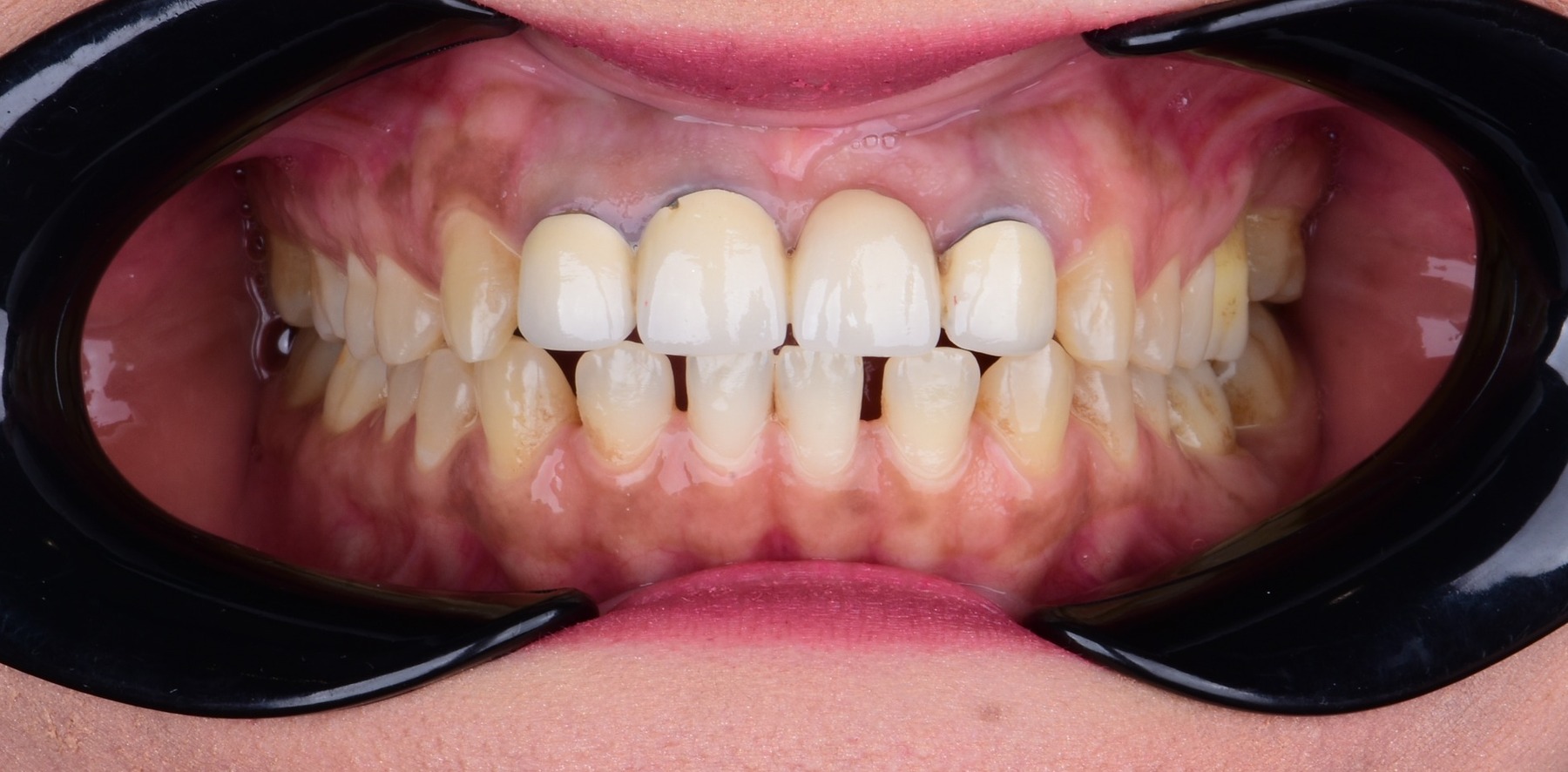 Pre-treatment
 Post-treatment
CASE-033 · Complex Cases
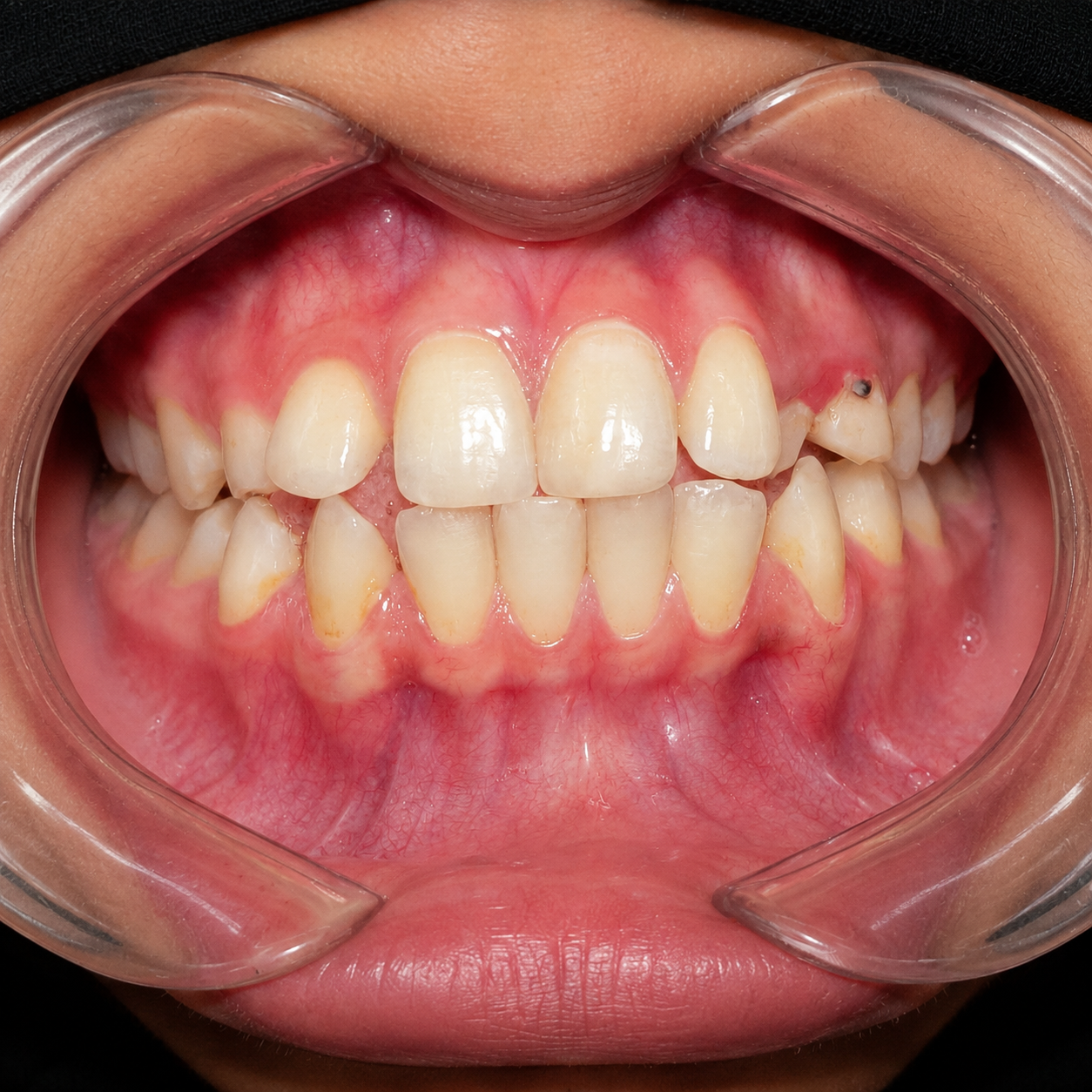
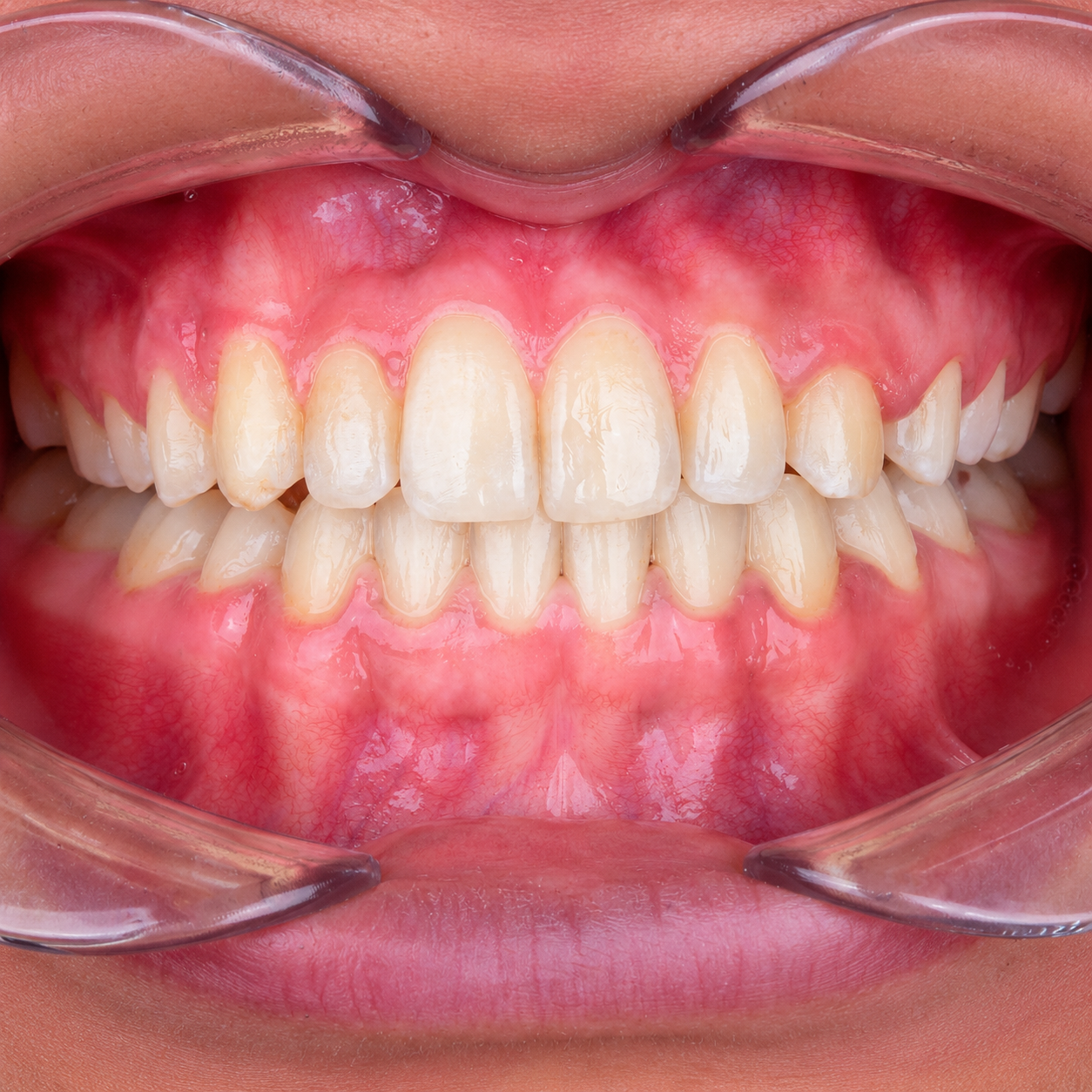
Adult Spacing and Worn Anterior Restorations — Orthodontic-Restorative Interface
- Approach
- Complex Cases
- Findings
- 05 logged
- Stages
- 05 planned
 Pre-treatment
 Post-treatment
CASE-034 · Fixed Orthodontics
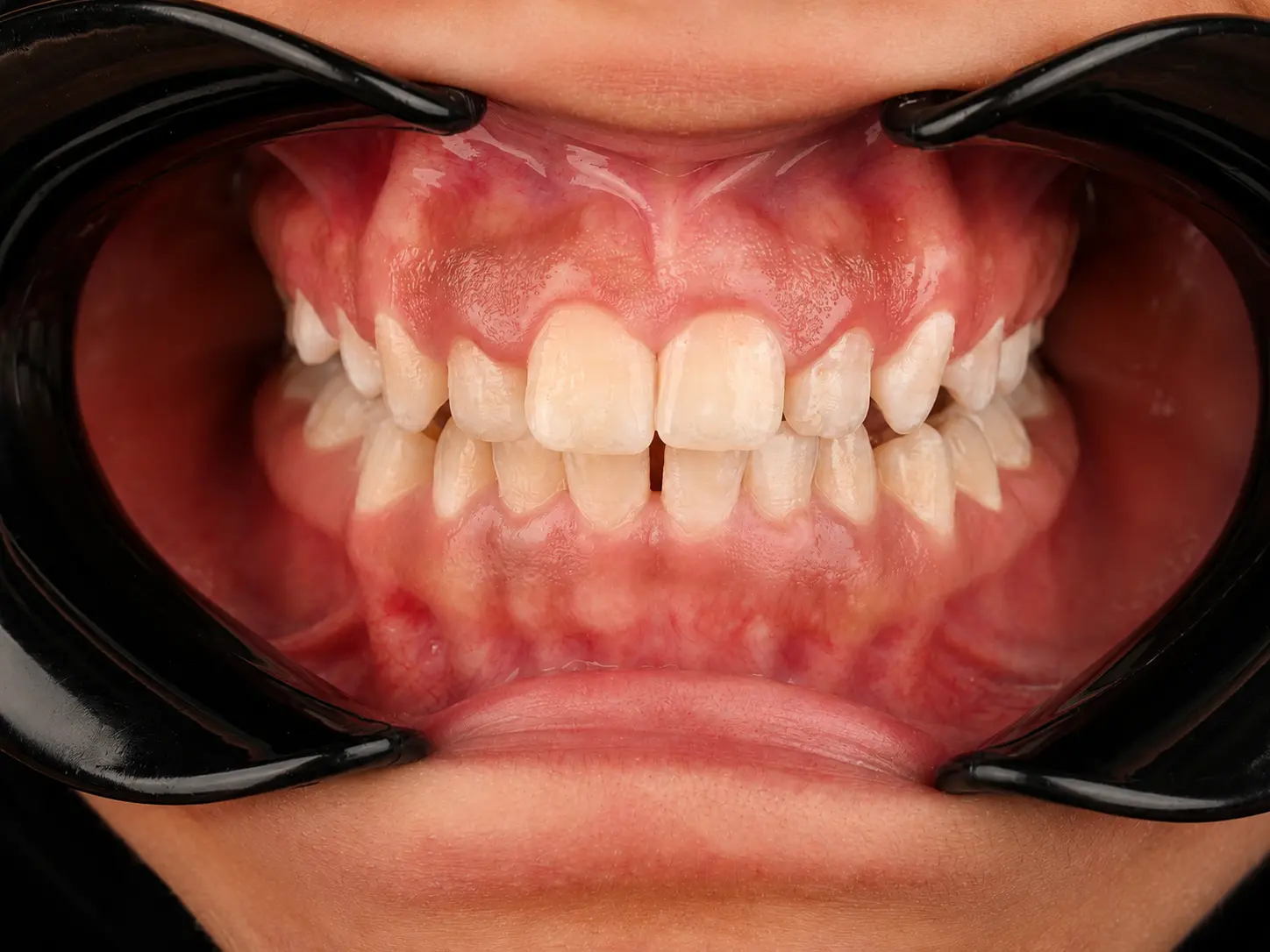
Severe Crowding with a Blocked-Out Upper Canine and Anterior Edge Wear
- Approach
- Fixed Orthodontics
- Findings
- 05 logged
- Stages
- 06 planned
 Pre-treatment
 Post-treatment
CASE-035 · Fixed Orthodontics
Crowding with Rotated Posteriors and an Unstable Anterior Contact
- Approach
- Fixed Orthodontics
- Findings
- 05 logged
- Stages
- 06 planned
Next step
Discuss a case
Bring a comparable case and work through its decision points together.