
CASE-034 · Fixed Orthodontics
Severe Crowding with a Blocked-Out Upper Canine and Anterior Edge Wear
Severe upper and lower crowding with an upper canine blocked out of the arch, rotated premolars, an irregular incisal plane and early edge wear — a case where space had to be created in a defined order before any alignment could be attempted.
- Findings
- 05
- Options
- 03
- Stages
- 06
Clinical records · drag to compare
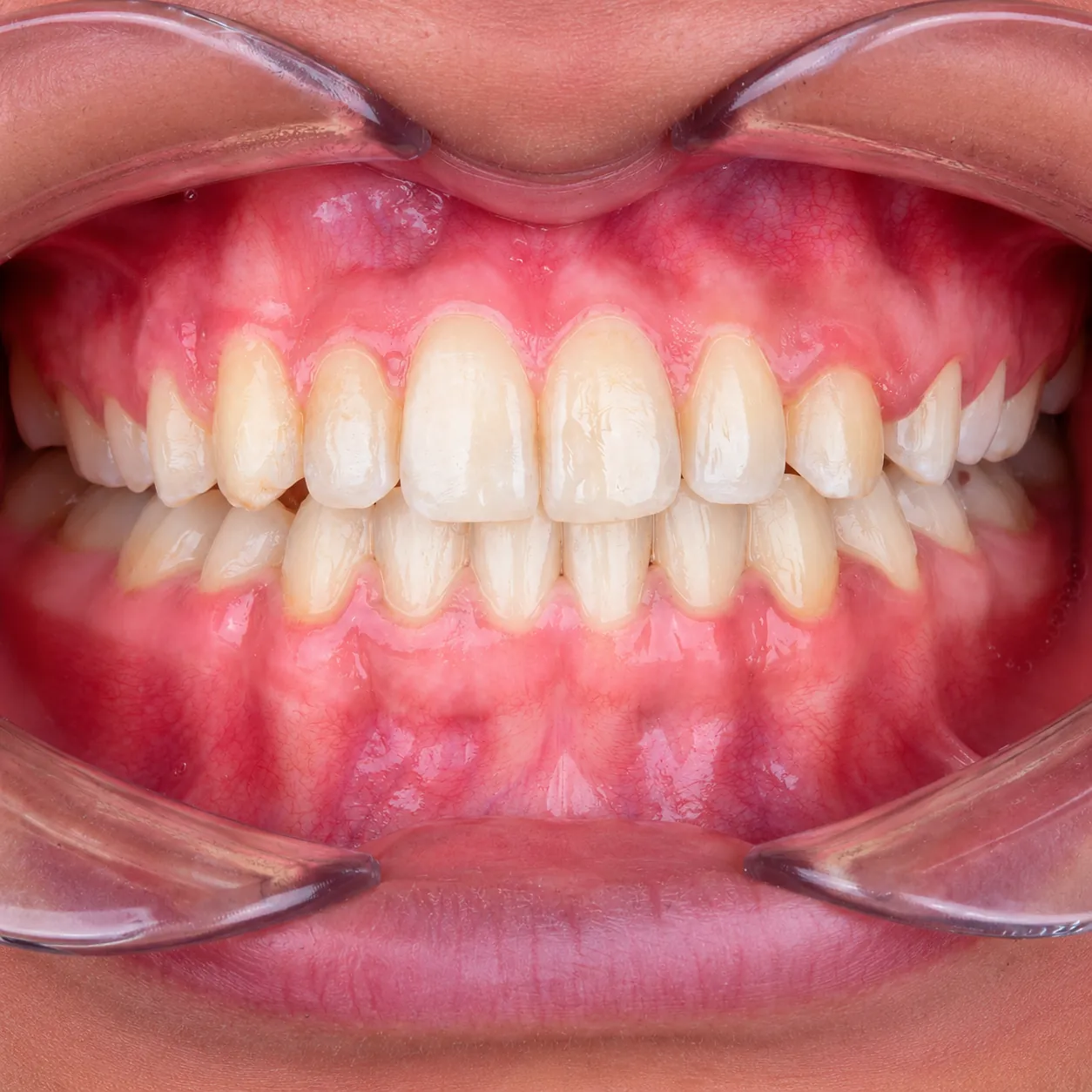
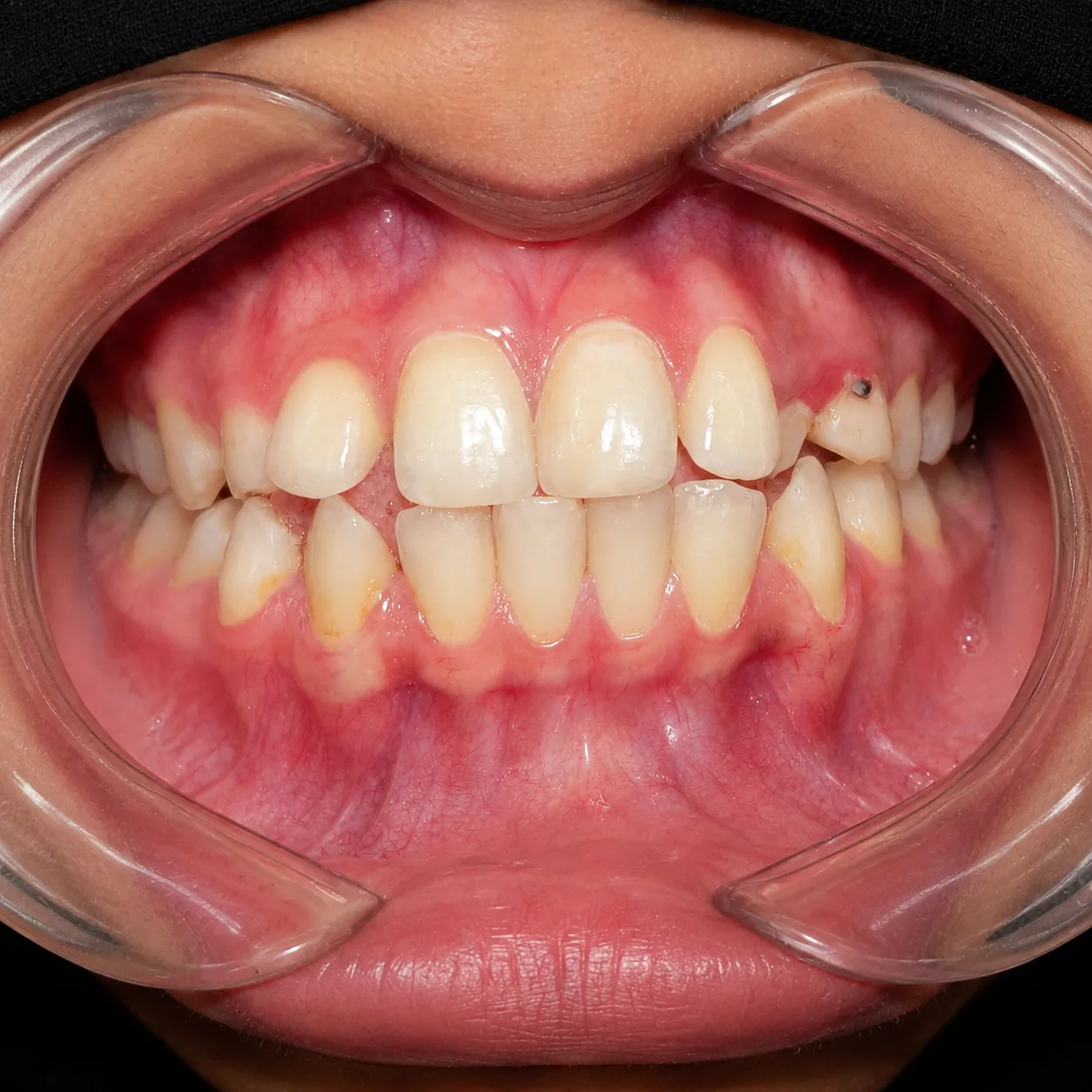
Clinical challenge
Creating space for a fully blocked-out canine without proclining an anterior segment that was already showing edge wear from an unfavourable contact pattern.
Outcome
Canine brought into the arch, crowding resolved without extractions, incisal plane levelled and hygiene access restored.
Diagnostic findings
- Upper canine displaced buccally and blocked out of the arch
- Severe crowding with overlapping and rotated anterior teeth
- Irregular incisal plane with early attrition on the upper incisal edges
- Rotated and imbricated premolars with contact points not in line
- Marginal gingival inflammation around the crowded contacts
Problem list
- Arch space deficit greater than the alveolus could absorb by expansion alone
- Crowding maintaining plaque stagnation and gingival inflammation
- Edge wear indicating the anterior teeth were carrying load they were not positioned for
Treatment objectives
- Create space in a sequence, not all at once
- Bring the canine into the arch along a controlled path
- Level the incisal plane and relieve the anterior load
- Restore access for hygiene at the crowded contacts
Options weighed
Expansion and alignment only
Insufficient space for the measured deficit; would push roots outside the alveolus.
Extraction of the blocked-out canine
Fast space gain; sacrifices the tooth best suited to guidance.
Staged space creation then canine alignment
Longest route; the only option that keeps the canine and respects the bony envelope.
The decision
Staged space creation — posterior derotation and measured transverse gain first, interproximal reduction second, canine alignment last.
Clinical reasoning
The crowding was the symptom; the sequence was the treatment. Rotated premolars were occupying more arch length than their true width, so derotation returned space that would otherwise have been bought with proclination. Only after that ledger was settled did the canine have a path that did not run through the adjacent roots.
Strategy
Fixed appliances with a staged space ledger: derotate the posterior segments, gain transverse width within the CBCT-verified limit, apply staged IPR, then engage the canine on a light continuous archwire with an open coil holding its space.
Biomechanics
Light continuous forces throughout; the canine was left unengaged until its space was measurably present, then brought in with an open coil and a piggyback wire to keep the adjacent roots from tipping into the gap.
Treatment sequence
- 01Hygiene phase and baseline records
- 02Posterior derotation and transverse gain
- 03Staged interproximal reduction
- 04Canine engagement and alignment
- 05Levelling, torque control and finishing
- 06Fixed lingual retention
Digital workflow
Alveolar width mapping set the expansion ceiling and an arch-length audit quantified how much space derotation would return before any IPR was scheduled.
Monitoring, adaptations & reassessment
Six-week reviews focused on the canine's path and on the adjacent root angulations rather than on crown alignment alone.
IPR at one contact was deferred after derotation returned more space than predicted, keeping enamel that the plan had allocated for removal.
Anterior contacts were reassessed after levelling to confirm the wear-producing contact pattern no longer engaged.
14 · Clinical takeaway
In severe crowding, space is not created — it is accounted for. Audit the arch before you spend it.
Related cases
Related clinical notes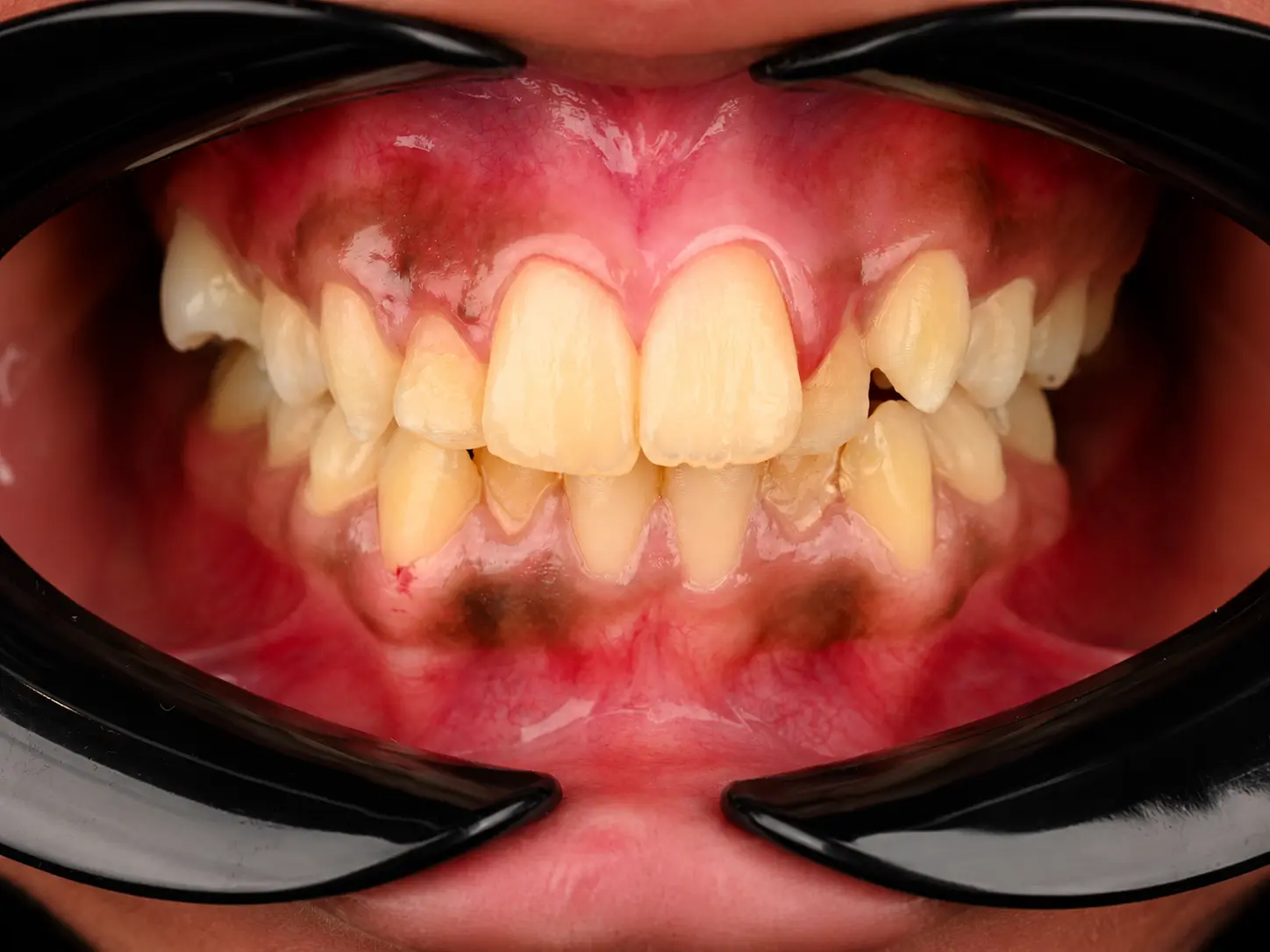 Pre-treatment
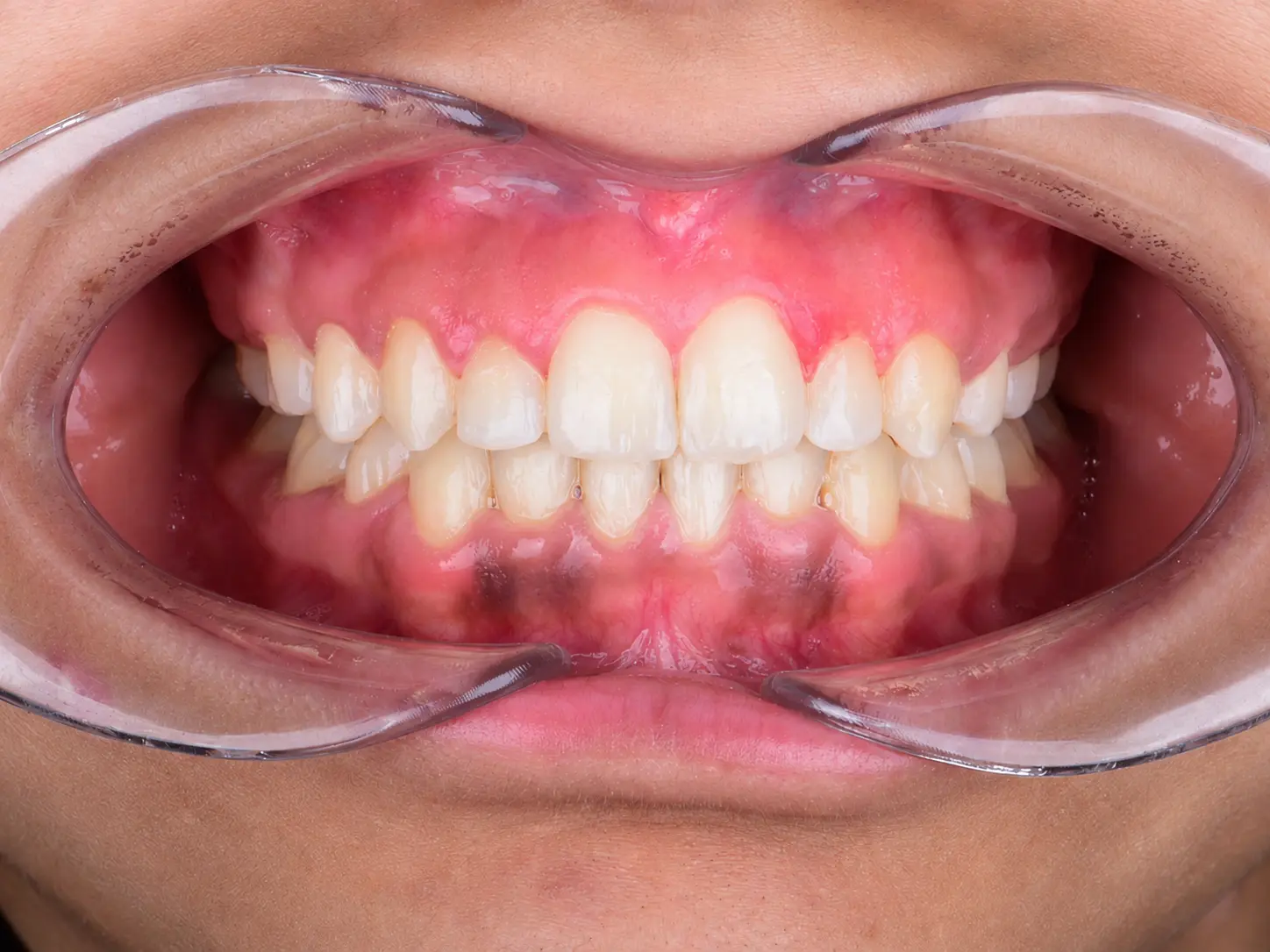 Post-treatment
CASE-032 · Fixed Orthodontics
Adult Anterior Crowding with Rotations and Attrition Risk
- Approach
- Fixed Orthodontics
- Findings
- 05 logged
- Stages
- 05 planned
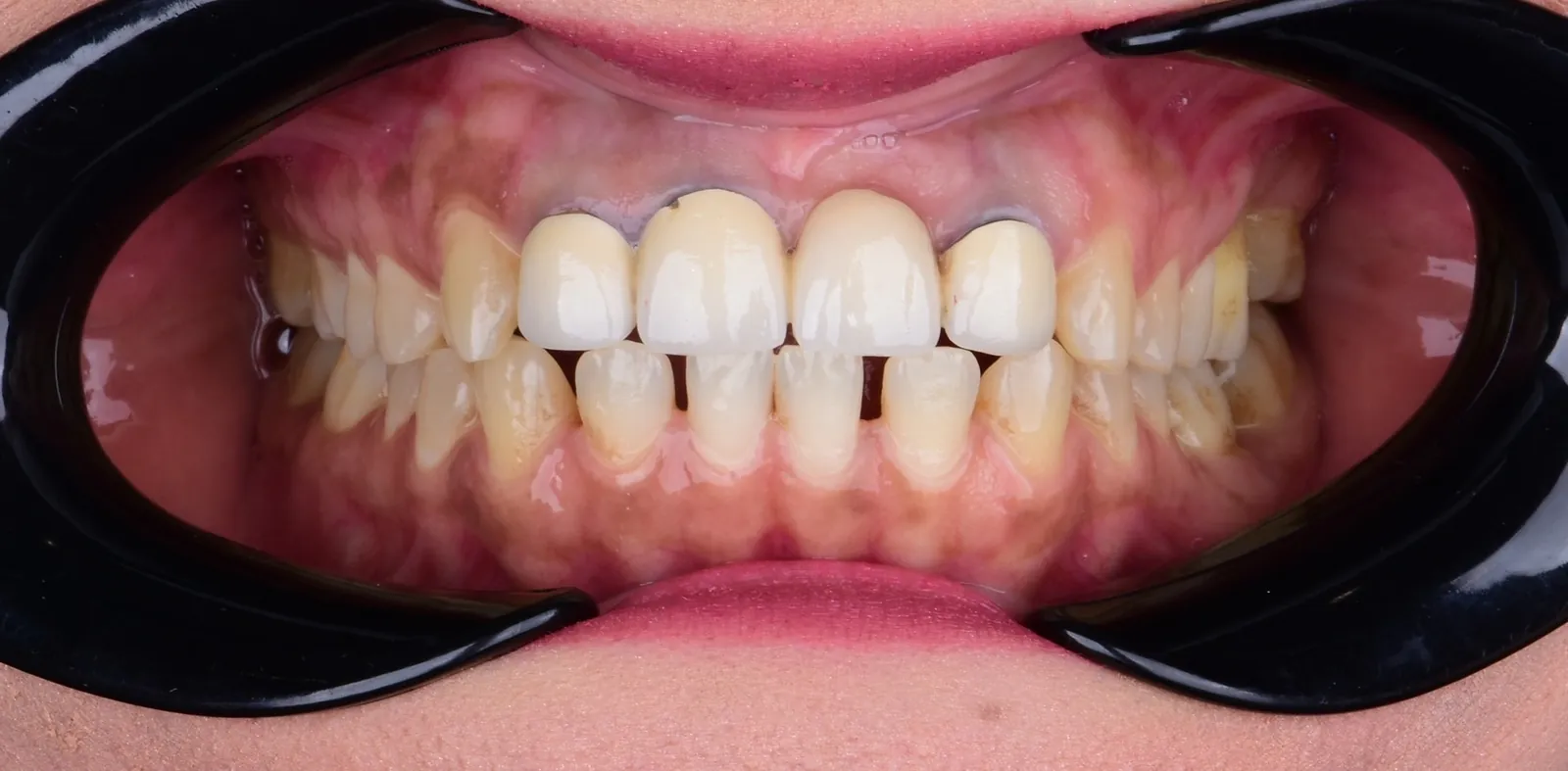 Pre-treatment
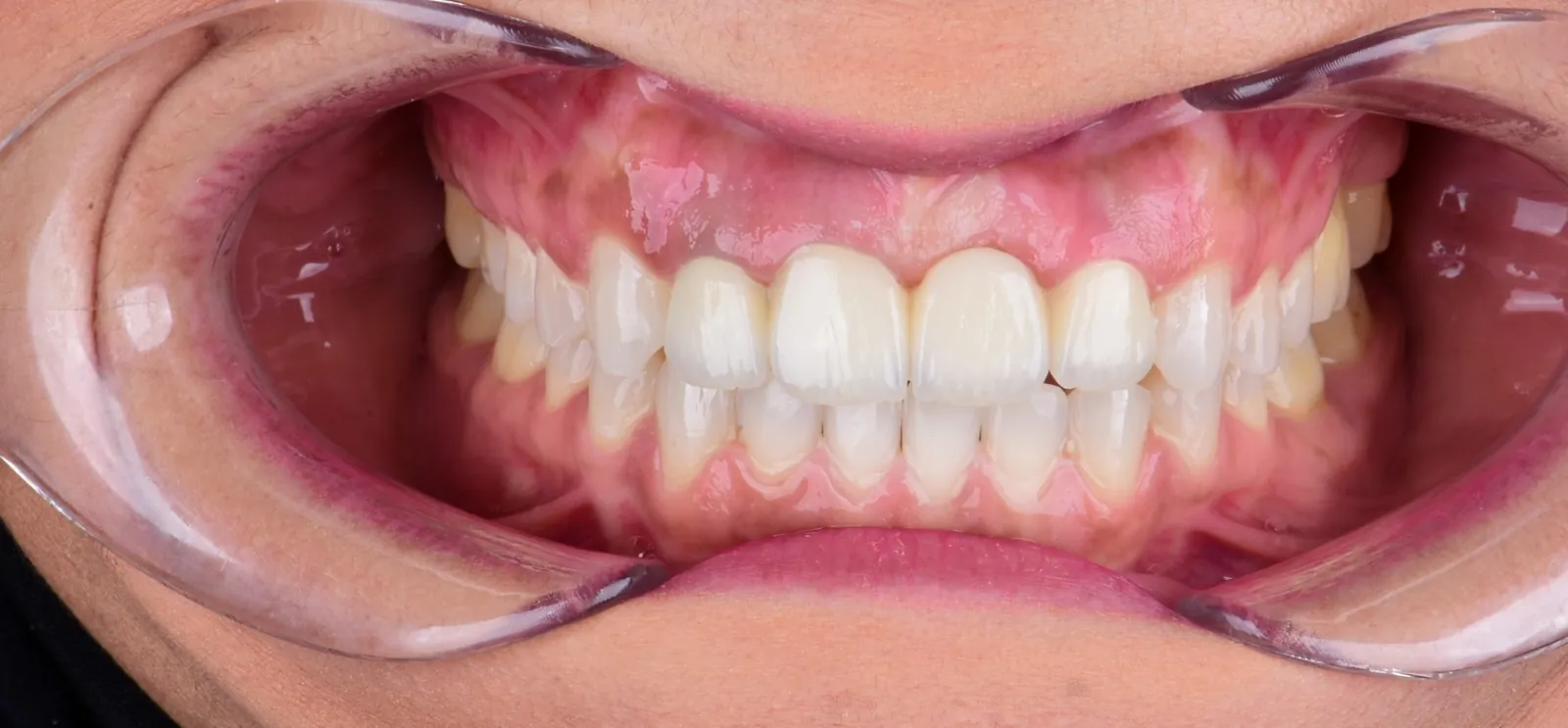 Post-treatment
CASE-033 · Complex Cases
Adult Spacing and Worn Anterior Restorations — Orthodontic-Restorative Interface
- Approach
- Complex Cases
- Findings
- 05 logged
- Stages
- 05 planned
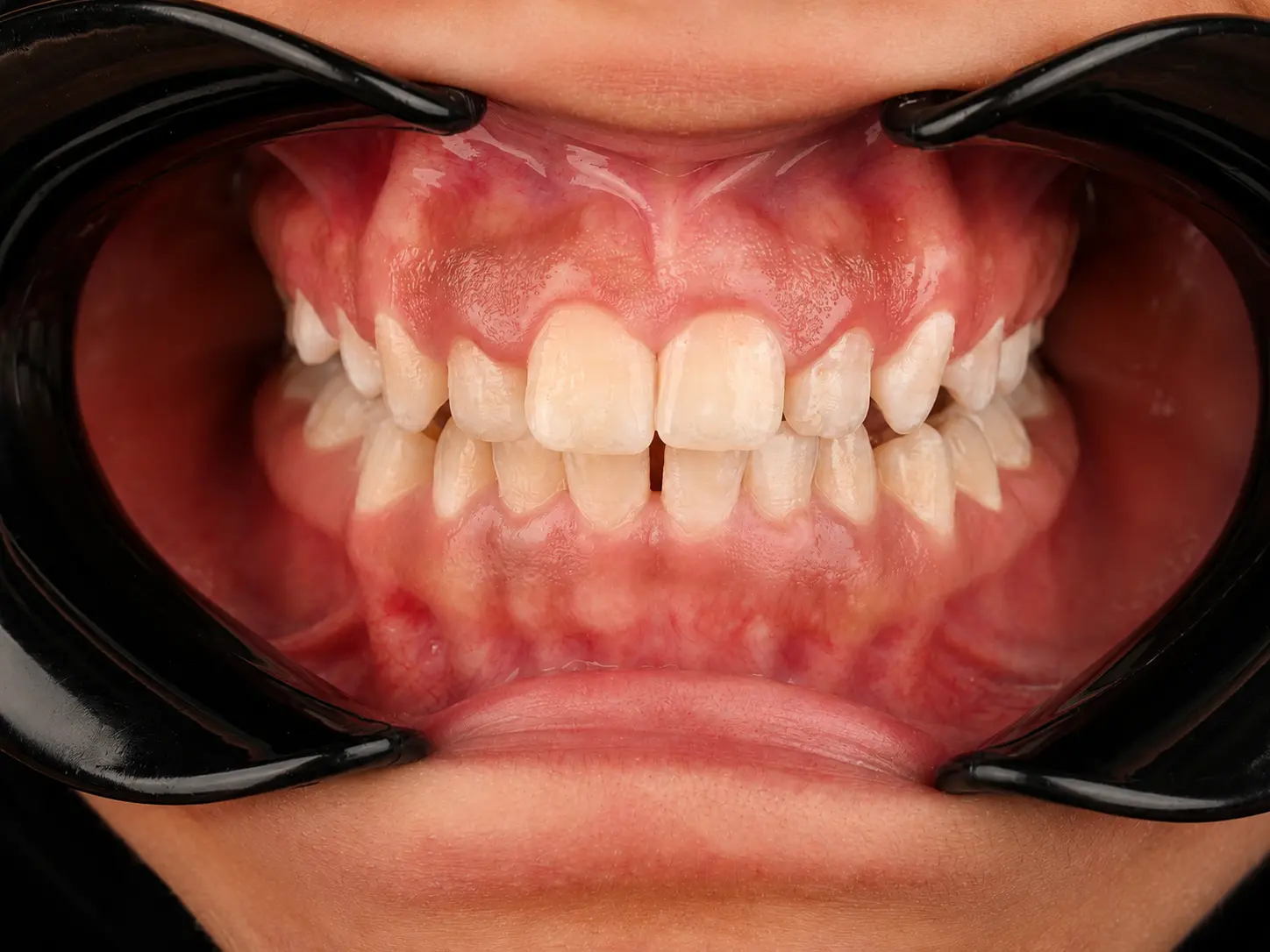 Pre-treatment
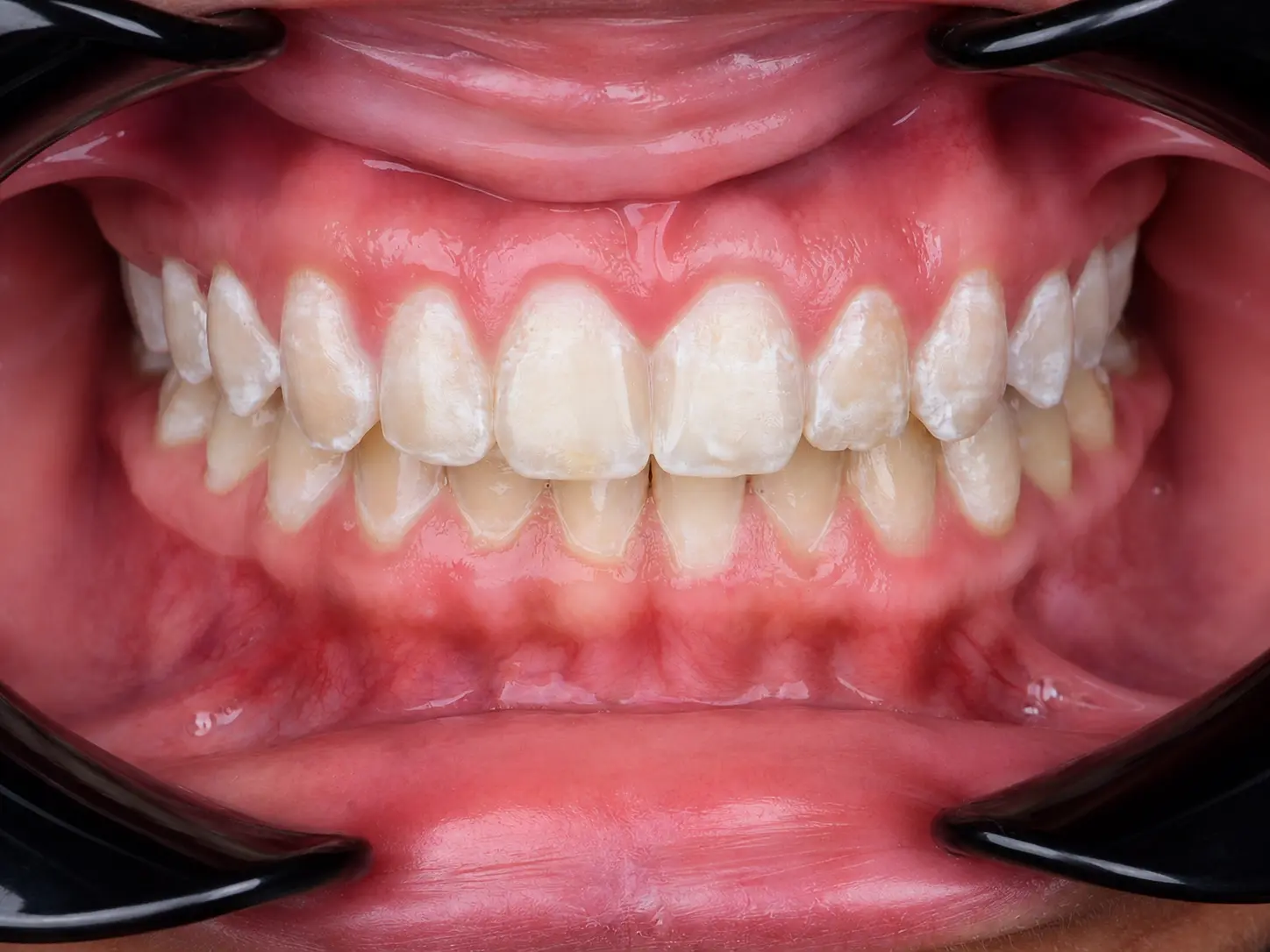 Post-treatment
CASE-035 · Fixed Orthodontics
Crowding with Rotated Posteriors and an Unstable Anterior Contact
- Approach
- Fixed Orthodontics
- Findings
- 05 logged
- Stages
- 06 planned
Next step
Discuss a case
Bring a comparable case and work through its decision points together.